
AI in week 19
(Yes, there is a translation again this week!)
De Speld had het toch niet grappiger kunnen verzinnen... Eén op de drie kinderen omzeilt de nieuwe Britse age checks gewoon door bijvoorbeeld, I kid you not, met make-up een snorretje op hun gezicht te tekenen!! En een op de zes omzeilt met hulp van ouders, ook best schokkend (al dan niet met nepsnor).
En, ook hilarisch maar iets minder voor de persoon in kwestie, Canadese vioolspeler (een fiddler, dus) Ashley MacIsaac, werd door Google aangezien voor... een kindermisbruiker, want ja dat is ook fiddlen! Taal wat is het toch moeilijk voor een computer om te snappen. De vioolspeler in kwestie klaagt Google nu aan voor 1.5 miljoen euro, ik hoop dat hij wint!
En dan blijven we nog even bij de muziek met de banger "Peter Thiel, randdebiel", die te horen was op een tech-kritisch festival bij SETUP in Utrecht, schreef Volkskrant, met een hoop positieve statistieken!
Gebruikten in 2024 nog 900 duizend Nederlanders open-sourceberichtenapp Signal, nu zijn dat er 2,3 miljoen. Een petitie tegen de geplande overname van de DigiD-infrastructuur door een Amerikaans bedrijf telt nu ruim 189 duizend handtekeningen. En verschillende initiatieven, zoals Smartphone Vrij Opgroeien, Mei Social Vrij en The Offline Club maken een vuist tegen scrollverslaving.
Verzet heeft dus zin, en kan nog leuk zijn ook! "Als we maar uit onze slachtofferrol komen. Het is tijd dat we een beetje gaan rellen." aldus Galiëne van Houten, programmamaker van Setup. Ja!
Misschien is "the most punk thing we can do" op dit moment wel, zoals ik de legendarische David Byrne onlangs nog hoorde zeggen, "love and empathy"! Maar niet voor de techbros, die verdienen het om zoals in Utrecht buiten gesmeten te worden!
Damn, honey!
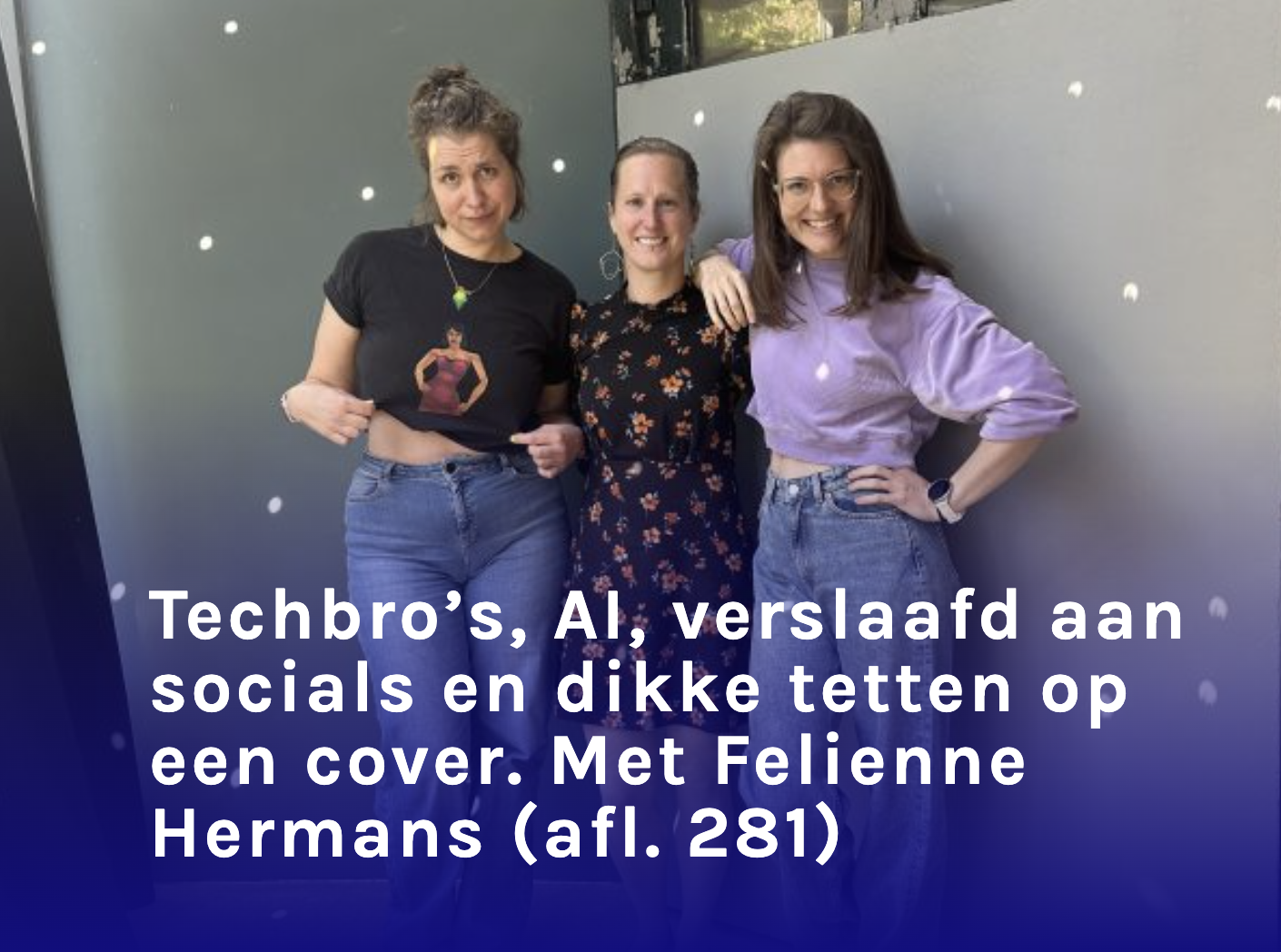
Ik was deze week te gast bij Damn, Honey! Supergaaf, je kan het hier terugluisteren. Wat een feestje om het zo uitgebreid te hebben over de intersectie tussen tech en feminisme!
Dus speciaal daarom een paar extra "feminisme en tech"-linkjes, want het blijft zo hard nodig. Bijvoorbeeld deze, een feitje dat Marie-Lotte en Nydia verbaasde (en jou misschien ook): in 2016 stapten drie bestuursleden van de Piratenpartij over naar de FvD. Het zijn natuurlijk maar drie mensen, maar het geeft ook aan hoe dicht het libertarische gedachtengoed dat in sommige stukken internetactivisme de boventoon voert/de tegen het anti-democratische aanzit. Dat is ergens juist ook niet gek, want ze vinden elkaar juist in de anti-overheidsgedachte.
Lees (en lach of huiver of beide...) maar eens de Declaration of the Independence of Cyberspace uit 1996. Die begint zo:
Governments of the Industrial World, you weary giants of flesh and steel, I come from Cyberspace, the new home of Mind. On behalf of the future, I ask you of the past to leave us alone. You are not welcome among us. You have no sovereignty where we gather.
Ook dit was het vroege internet, een verzameling cyberlibertarians, die het internet zagen als een manier om overheden te omzeilen, met onbeperkte free speech als uitgangspunt:
We are creating a world where anyone, anywhere may express his or her beliefs, no matter how singular, without fear of being coerced into silence or conformity.
En ja, bestaande overheden hebben, zoals de declaratie ook noemt, absoluut niet humaan en eerlijk is, en je daartegen verzetten is terecht en goed. Maar het ondermijnen van de macht van overheden en media-bedrijven, zien we nu, kent ook schaduwkanten, en die zien de absolutisten niet. Bovendien hebben ze zich niet bepaald gehouden aan hun belofte dat het internet een wereld is die "all may enter without privilege or prejudice accorded by race, economic power, military force, or station of birth." Enter misschien wel, maar meedoen zonder gediscrimineerd te worden en overspoeld met haat, dat niet.
Dat blijkt uit dit onderzoek van oa Oxford (en als co-auteur de legendarische Judy Wajcman!). Uit een enquête met 2000 Britten blijkt dat:
Only 23% of women report feeling comfortable expressing political views online, compared with 40% of men.
Vrouwen hebben vaker last van "image-based abuse, cyberstalking and cyberflashing", en zijn vaker (terecht dus he?) bang voor negatieve reacties online.
Nou, dat heb je je vrije internet hoor, maar niet heus. AI versterkt die dynamiek nog eens. Zo schrijft bijvoorbeeld ook de Observer dat rapporteert over verschillende onderzoeken naar AI en gender-related harms waaruit blijkt dat 97% van al het AI-gegenereerde pornografische materiaal afbeeldingen van meisjes betreft. Platformen doen eigenlijk niets tegen dit soort gebruik, dat is geen verrassing:
Both reports argue that the AI platforms' design choices are encouraging and enabling serious gendered harms, and that the regulatory response has been nowhere near fast enough
Chat-app Character.AI, specifiek gemaakt om met een digitale vriend te chatten, heeft bijvoorbeeld persona's genaamd: abused wife en shy schoolgirl en sexy child, waarbij de laatste wordt beschreven als "here to greet you desires [sic]". Meer details over Character.AI in deze rapportage van digitale actiegroep Citizen Reunited.
Hoe staat het nog in de appstore, dat is toch eigenlijk niet te filmen?
Laptops op school, ja of nee?
Wat moet ik hier nou van vinden... Gratis laptops op school? Aan de ene kant kan je zeggen, een laptop is beter dan geen laptop, dus kinderen die er geen hebben zouden er gratis eentje moeten krijgen. Ja. Maar, ongelijkheid gaat natuurlijk blijven, want een rijker kind zal altijd een betere, nieuwere, mooiere laptop hebben, en vooral een nieuwe als er iets mis is met de oude. Zou het dus niet beter zijn als scholen het overbodig zouden maken om een laptop te hebben, door minder digitaal te werken, en door wanneer ze dat nodig vinden, dat in een computerlokaal op school te doen. Dan heeft ook iedereen dezelfde materialen.
Het probleem ongelijkheid zit veel dieper dan de laptop, dat zit m in het maken van het huiswerk zelf. Waar de ene leerling in een ruim huis met eigen slaapkamer fijn geconcentreerd kan werken, zit de ander met drie broertjes op een slaapkamer zonder bureau. Gezellig en je leert er ongetwijfeld andere vaardigheden, maar niet de ideale condities voor leren. Zoals ik eerder al eens schreef:
Toen ik in corona-tijd een keer online lesgaf in de klas van een bevriende docent op een rijke witte school, en opeens slaapkamers inkeek, ipv keukens of trappenhuizen, zag ik pas echt hoe groot de verschillen in Nederland zijn.
Heel eerlijk gezegd had ik voor die les nog nooit echt nagedacht over die huis in _huis_werk. Welke aannames doen scholen en docenten eigenlijk over dat huis? Leerlingen een laptop geven is dus maar een pleister op de wonde, en geen systeemoplossing, want op drie laptops op drie bedjes kan je nog steeds niet goed werken, en als je geen tijd hebt omdat je je broertjes naar bed moet brengen of het gezinsinkomen aan moet vullen ook niet.
Laat kinderen toch het leeuwendeel van het werk op school doen, en als je ze al huiswerk geeft, doe dan iets simpels zoals (digitale) flitskaarten waar je weinig spullen voor nodig hebt. Of geef ze als huiswerk de opdracht om iets in de wijk te zoeken, een boom of een struikelsteen bijvoorbeeld. Ik laat leerlingen soms op digi-jacht gaan; ze moeten dan in hun wijk een digitaal apparaat zoeken, een foto maken en zoveel mogelijk erover uitzoeken. Of stop er helemaal mee. Leer kinderen een gezonde work-life balance aan, na 6 uur op school opletten heeft het brein wat ontspanning en beweging nodig en niet nog meer denkwerk!
Want een laptop voor iedereen, dat is niet alleen positief, ook daar heb ik al heel wat over geschreven. Een laptop in de klas is niet alleen een bron van leren maar ook een bron van afleiding en stress. Ook New York Times stond vorige maand stil bij 'laptop remorse' van scholen:
Four years ago, her school in McPherson, Kan., banned student cellphones during the school day. But digital distractions continued. Many children watched YouTube videos or played video games on their school-issued Chromebook laptops. Some used school Gmail accounts to bully fellow students.
Ja, dat is herkenbaar! De belofte van computers (zeker Chromebooks die in hoge mate aftrek vonden, ook in Nederland) was dat ze leerlingen zouden gaan helpen bij hun leerproces:
"The individual use of Chromebooks is a way to empower students to maximize their full potential," the middle school's device policy explained in 2016.
Dat viel dus nogal tegen...
En een goed perspectief vind ik dat van de voorbeeldrol, haalde ik uit ander stuk, ook in New York Times. Ouders die thuis digitale tools maar mondjesmaat aanbieden merken dat kinderen op (pre)school juist veel in aanraking komen met technologie. Dat beperkt als ouders natuurlijk ook wel de speelruimte die je hebt in het niet aanbieden. School is meer dan een plek om te leren, het is ook een plek waar we de wereld vormen!
Mei, Social Vrij Tips!
Hoe gaat het met de afkickende scroll-duimpjes? Komen de pezen al een beetje tot rust? Niet alleen deze maand in Nederland, maar overal neemt social media gebruik af, is te lezen in... je raadt het niet... de blog van Marc Andreesen zijn investeringsbedrijf a16z!! Die schrijven over Meta:
Meta's daily active users declined for the first time, well, not "ever," but the first time since 2021, which makes this the second time ever.
En het is niet alleen Meta, tijd die mensen besteden op de socials piekte midden '22 en daalt vanaf dat moment, en het sterkst onder mensen tussen 16 en 24, en daarna die tussen 25 en 34. Een goed teken, lijkt me. Misschien wel een signaal dat het allemaal te gek en te lelijk geworden is. Dat zien ook deze jongeren die ervoor kiezen om geen smartphone te hebben (uit Volkskrant). Het is verslavend ongezellig, ja.
Als jij het nog volhoudt zonder socials, hier weer leestips voor wie ze mist!
Begin je dag bijvoorbeeld goed met dit doldwaze verhaal over stewardess Mikky Keetels die even twee records op de marathon verpulvert in drie weken tijd!
Of deze fijne longread over het vroege en mooie internet, die ook jaloersmakend mooi is vormgegeven!
Twitter changed hands, changed names, and changed shape, and the version of it you knew is gone. [...]
The blogs you read in 2012 redirect to parked domains. The forums where you learned what you know got bought, gutted, redesigned, and left to rot.
This is real. You are not imagining it.
Het is zowel een hoopvol, optimistisch verhaal, als een fijne intro in wat er onder de bovenlaag van het internet aan technologie te vinden is voor wie daar niet zo in zit. Echt een aanrader.
Geen zin om te lezen, omdat het heerlijk weer is en je lekker aan het wandelen of fietsen bent? Heb ik ook nog twee podcastjes voor je!
De eerste van de Media Innovatie Podcast van Lars Anderson en Philippe Remarque, die Eric Smit te gast hebben. Hij vertelt in de podcast over zijn nieuwe initiatief The Firewall, waarin onderzoeksjournalistiek a la Follow The Money, maar dan over Big Tech gecombineerd gaat worden met rechtszaken waar nodig. Want Big Tech, zo zegt Smit heel terecht, wordt gerund door slechte mensen, en die moeten we aanpakken!
En deze van Rebecca Solnit (ze kwam al eerder langs toen ik het over epistemologisch onrecht had), waarin ze zo hoopvol vertelt over welke slagen we al gewonnen hebben als vrouwen:
Because if you listen to what MAGA, and Trumpism, and the right is saying, they're telling us five things. The last two will sound super familiar to everyone, but I don't think people are hearing the first three clearly enough. So here's my little list.
You all are very powerful, number one.
Two, you've changed everything.
Three, all those different things you do are actually all connected. All the queer rights, human rights, anti-racism, feminism, environmental, climate, anti-colonialism, et cetera. Those are the things we don't hear clearly enough, maybe because they're shouting so loudly, "You did all those things and we fucking hate it," that's four.
And, "We want to change it all back."
Het is zo krachtig, want ja, heel veel is ons gelukt (dat schreef ik zelf ook al eerder over de worsteling van links; we hebben de grote klappen gewonnen). Het is een lange zit, maar echt de moeite waard!
En dan nog even dit
- Het kan je niet ontgaan zijn, de eindexamens zijn begonnen! Goed stuk in NRC van neurowetenschapper Ingrid Nieuwenhuis over hoe toetsen niet per se leidt tot langdurig leren!
- Nog een podcast, met mij erin, van het platform AI en overheid, over AI en ethiek!
Slecht nieuws
Slechtste nieuws eerst: De persvrijheid is op het laagste punt in 25 jaar.
En helaas pindakaas, de bezorgde burgers die een kort geding aanspanden tegen de overheid vanwege DigiD hebben niet gewonnen. Dit zijn trouwens andere bezorgde burgers dan van de zaak waar ik aan meedoe. Onze zaak dient op 18 mei pas!
Over onze rommelende overheid gesproken, op digitaal vlak, de marechaussee gebruikte toch Palentir, ook al zei minister eerder Van Weel van niet, aldus Follow the Money.
Onderzoek van hacker That Privacy Guy laat zien dat Google Chrome ongevraagd een AI model van 4 gigabyte op je harde schijf zet! En haal je het weg, dat zet Chrome het zonder pardon weer terug. Het bestand heet weights.bin, dus als je Chrome gebruikt kan je zelf even kijken of jij het ook gratis gekregen hebt. In zijn heel gedetailleerde analyse legt hij uit waarom dat zowel tegen de wet is, als extreem slecht voor het milieu, want het gaat om een paar MILJARD keer 4 gig.
Ook ongevraagd (alhoewel waarschijnlijk wel toegestaan volgens het contract dat mensen tekenen) Meta logt alle toetsaanslagen en muisbewegingen van hun medewerkers, om AI mee te trainen.
Afgrijselijk stuk over babies die op gruwelijke wijze overlijden omdat ze geen vitamine K shot meer krijgen bij de geboorte, omdat ouders dat niet willen. Het gaat door merg en been:
They shaved another boy's soft locks to embed a needle directly into his skull to reduce the pressure in his brain. None of it was enough.
At the morgue, the babies were brought in with their diapers and blankets and with their hospital ID bracelets still wrapped around their tiny ankles.
Baby'tjes die de prik niet krijgen, hebben 81 keer (!!!) zoveel kans om bloedingen te krijgen, en van degenen waarbij die optreden overlijdt 20%. Ja, ook dat is het vrije internet, vol met free speech over dat je lichaam alles zelf kan en dat vaccins slecht zijn.
Goed nieuws
Misschien word ik er te blij van, en is het mooier dan het lijkt, maar ik smulde toch van Futurist die rapporteert dat Gen-Z helemaal geen zin heeft in AI!
Recent polling data paint a damning picture of young people's rapidly deteriorating opinion of AI. One recent Gallup poll showed that only 18 percent of Gen Zers said they felt "hopeful" about AI, a drop of nine percent compared to 2025.
Ook Verge kwam met een stuk over dezelfde poll trouwens, het verhaal resoneert echt, New Republic wijdde een breder stuk aan de backlash.
Er is genoeg slecht nieuws over volksgezondheid, dus deze moeten we zeker niet missen, de Guinea Worm-ziekte is bijna de wereld uit! In 1986 trof de ziekte die door een worm veroorzaakt wordt nog 3.5 miljoen mensen, vorig jaar nog maar 10. En er was niet eens een vaccin voor nodig, de klus werd geklaard met voorlichting en betere drinkwatervoorziening. Amazing toch wat we als mensheid kunnen!
Verschillende uitgevers, waaronder Elsevier, dagen Meta weer voor de rechter voor inbreuk op copyright. Weet niet voor wie ik nu moet rooten, maar mes op de keel stem ik dan toch maar voor Elsevier, ook al maakte die vorig jaar ook nog 1.17 MILJARD euro winst (door het uitbuiten van wetenschappers en het graaien in belastinggeld).
Events, voor in de agenda!
De komende tijd ben ik weer op een paar plekken te zien!
- Maandag 18 mei zit ik in een panel over de toekomst van de wetenschap in Spui25 (Engels)
- Donderdag 21 mei bij de Abraham Kuyperlezing (Ik werd er al over geïnterviewd)
- Vrijdag 5 juni op de TU/e zit ik in een panel over de toekomst van peer review (Engels)
- Woensdag 10 juni spreek ik in Antwerpen op DDD Europe (Engels)
- Woensdag 17 juni op LAIDENFEST in Leiden
- En alvast voor na de vakantie... Op 4 september op het SpaceRock IT festival!
Geniet van je boterham en extraveel van deze nieuwsbrief, want volgende week ben ik een lang weekend weg, en is er alleen een mini-special!
English
The Onion couldn't have come up with something better… One in three children simply bypasses the new British age checks by, for example, I kid you not, drawing a moustache on their face with makeup!! And one in six gets around it with their parents' help, which is also pretty shocking (with or without a fake moustache).
And, also hilarious but slightly less so for the person in question, Canadian violinist (a fiddler) Ashley MacIsaac, was mistaken by Google for... a child molester, because, well, that's a fiddler too! Language, it's so hard for a computer to understand. The fiddler in question is now suing Google for 1.5 million euros; I hope he wins!
And let's stick with music for a moment with the banger "Peter Thiel, randdebiel" (meaning moron, but in Dutch it rhymes) played at a tech-critical festival at SETUP in Utrecht, wrote Volkskrant (in Dutch) along with a bunch of positive stats:
In 2024, 900,000 Dutch people were still using the open-source messaging app Signal; now there are 2.3 million. A petition against the planned takeover of the DigiD infrastructure by an American company now has over 189,000 signatures. And various initiatives, such as Growing Up Smartphone-Free, May Social Free, and The Offline Club, are taking a stand against scroll addiction.
So resistance makes sense, and it can even be fun! "As long as we stop playing the victim. It's time we started causing a little trouble." says Galiëne van Houten, program creator at Setup. Yes!
Maybe "the most punk thing we can do" right now is, as I recently heard the legendary David Byrne say, "love and empathy"! But not for the techbros, they deserve to be thrown out onto the street, just like in Utrecht!
Damn, honey!
I was a guest on Dutch feminist podcast Damn, Honey this week! So cool, you can listen to it here. What a blast to talk so extensively about the intersection of tech and feminism!
So I have a few extra "feminism and tech" links, because it's still so desperately needed. For example, this one, a fact that surprised Marie-Lotte and Nydia (and maybe you too): in 2016, three board members of the Dutch Pirate Party switched to FvD, an anti-democratic party. Of course, it's only three people, but it also shows how close the libertarian ideology that dominates certain strands of internet activism is to being anti-democratic. In a way, that's not surprising, because they actually find common ground in their anti-government stance.
Just read (and laugh or shudder or both...) the Declaration of the Independence of Cyberspace from 1996. It begins like this:
Governments of the Industrial World, you weary giants of flesh and steel, I come from Cyberspace, the new home of Mind. On behalf of the future, I ask you of the past to leave us alone. You are not welcome among us. You have no sovereignty where we gather.
This, too, was the early internet, a collection of cyberlibertarians who saw the internet as a way to circumvent governments, with unlimited free speech as their guiding principle:
We are creating a world where anyone, anywhere may express his or her beliefs, no matter how singular, without fear of being coerced into silence or conformity.
And yes, as the declaration also notes, existing governments are by no means humane or fair, and resisting them is both right and just. But undermining the power of governments and media companies, as we now see, also has its downsides, and the absolutists fail to see them. Moreover, they have not exactly kept their promise that the internet is a world where "all may enter without privilege or prejudice accorded by race, economic power, military force, or station of birth." Enter perhaps, but participating without being discriminated against and inundated with hate, that is not the case.
This is evident from this study by Oxford, among others (and featuring the legendary Judy Wajcman as a co-author!). A survey of 2,000 Brits reveals that:
Only 23% of women report feeling comfortable expressing political views online, compared with 40% of men.
Women are more likely to experience "image-based abuse, cyberstalking, and cyberflashing", and are more often (rightfully so, then?) afraid of negative reactions online.
Well, that's the price of a free internet, right? Not really. AI further amplifies these dynamics. For example, the Observer also reports on various studies regarding AI and gender-related harms, which show that 97% of all AI-generated pornographic material consists of images of girls. Platforms are essentially doing nothing to address this kind of use, which is not a surprise:
Both reports argue that the AI platforms' design choices are encouraging and enabling serious gendered harms, and that the regulatory response has been nowhere near fast enough
The chat app Character.AI, specifically designed to chat with a digital friend, features personas named: "abused wife," "shy schoolgirl," and "sexy child," with that last one described as "here to greet your desires [sic]". More details about Character.AI in this report by the digital advocacy group Citizen Reunited.
What's the situation in the app store? Unbelievable, right?
Laptops in school, yes or no?
What am I supposed to make of this... Our parliament wants to give all kids free laptops in school? On the one hand, you could say a laptop is better than no laptop, so kids who don't have one should get a free one. Yes. But, of course, inequality will persist, because a wealthier child will always have a better, newer, better laptop, and especially a new one if something is wrong with the old one. So wouldn't it be better if schools made having a laptop unnecessary by doing less digital work, and by doing it in a computer lab at school when they deem it necessary? Then everyone would have the same resources.
The problem of inequality runs much deeper than the laptop; it lies in the act of doing homework itself. While one student can work comfortably and with focus in a spacious house with their own bedroom, another is crammed into a bedroom with three younger brothers and no desk. It's cozy, and you undoubtedly learn other skills there, but it's not the ideal environment for learning. As I wrote before (in Dutch):
When I once taught an online class during the pandemic in the classroom of a teacher friend at a wealthy white school, and suddenly looked into bedrooms instead of kitchens or stairwells, I truly saw how vast the differences are in the Netherlands.
To be perfectly honest, before that lesson I had never really thought about that home in homework. What assumptions do schools and teachers actually make about that home? Giving students a laptop is therefore just a band-aid, not a systemic solution, because you still can't work properly with three laptops on three beds, and if you don't have time because you have to put your little brothers to bed or supplement the family income, you can't do it either.
Let children do most of the work at school, and if you do give them homework, make it something simple like (digital) flashcards that require few materials. Or assign them the task of finding something in the neighborhood, a tree or a stumbling stone, for example. I sometimes have students go on a digital hunt; they have to find a digital device in their neighborhood, take a photo, and find out as much as possible about it. Or just stop homework altogether. Teach children a healthy work-life balance; after paying attention for 6 hours at school, the brain needs some relaxation and movement, not more mental work!
Because a laptop for everyone isn't just positive, I've written quite a bit about that as well. A laptop in the classroom isn't just a source of learning but also a source of distraction and stress. Even The New York Times addressed “laptop remorse” in schools last month:
Four years ago, her school in McPherson, Kan., banned student cellphones during the school day. But digital distractions continued. Many children watched YouTube videos or played video games on their school-issued Chromebook laptops. Some used school Gmail accounts to bully fellow students.
Yes, that sounds familiar! The promise of computers (especially Chromebooks, which were very popular, even in the Netherlands) was that they would help students in their learning process:
"The individual use of Chromebooks is a way to empower students to maximize their full potential," the middle school's device policy explained in 2016.
So that turned out to be quite a disappointment...
And I think the perspective on the role model is a good one; I took it from another article, also in the New York Times. Parents who offer digital tools only sparingly at home notice that children actually come into contact with technology a lot at (pre)school. As a parent, that naturally limits the leeway you have in not offering them. School is more than a place to learn; it's also a place where we shape the world!
May Social Free, tips!
How are those scroll-thumbs doing? Are the tendons starting to relax? Not just this month in the Netherlands, but everywhere, social media use is declining, as reported in... you guessed it... Marc Andreesen’s blog for his investment firm a16z!! They write about Meta:
Meta's daily active users declined for the first time, well, not "ever," but the first time since 2021, which makes this the second time ever.
And it's not just Meta; time spent on social media peaked in mid-2022 and has been declining ever since, most sharply among people aged 16 to 24, followed by those aged 25 to 34. A good sign, I'd say. Perhaps a signal that it's all become too crazy and too ugly. These young people who choose not to own a smartphone (from Volkskrant). It's addictive and "ongezellig" (no fun).
If you're still managing without social media, here are some reading recommendations for those who miss it!
Start your day off right, for example, with this crazy story about flight attendant Mikky Keetels, who just shattered two marathon records in the span of three weeks (Dutch).
Or this lovely long read about the early, beautiful internet, which is also designed in a way that's enviably beautiful!
Twitter changed hands, changed names, and changed shape, and the version of it you knew is gone. [...]
The blogs you read in 2012 redirect to parked domains. The forums where you learned what you know got bought, gutted, redesigned, and left to rot.
This is real. You are not imagining it.
It's both a hopeful, optimistic story and a great introduction to the technology hidden beneath the surface of the internet for those who aren't so into that stuff. Highly recommended.
Don't feel like reading because the weather is lovely and you're out for a nice walk or bike ride? I've also got two podcasts for you!
The first is the Media Innovation Podcast by Lars Anderson and Philippe Remarque, who have Eric Smit as a guest (Dutch) In the podcast, he talks about his new initiative, The Firewall, which combines investigative journalism à la Follow The Money, but focused on Big Tech, with lawsuits where necessary. Because Big Tech, as Smit quite rightly says, is run by bad people, and we need to take them on!
And this one by Rebecca Solnit (I talked about her before when I was talking about epistemological injustice, in Dutch), in which she speaks so hopefully about the battles we’ve already won as women:
Because if you listen to what MAGA, and Trumpism, and the right are saying, they're telling us five things. The last two will sound super familiar to everyone, but I don't think people are hearing the first three clearly enough. So here's my little list.
You all are very powerful, number one.
Two, you've changed everything.
Three, all those different things you do are actually all connected. All the queer rights, human rights, anti-racism, feminism, environmental, climate, anti-colonialism, et cetera. Those are the things we don't hear clearly enough, maybe because they're shouting so loudly, "You did all those things and we fucking hate it," that's four.
And, "We want to change it all back."
It's so powerful, because yes, we've achieved a great deal (I wrote about this myself earlier regarding the struggles of the left; we’ve won the major battles). It's a long haul, but truly worth it!
Bad news
Worst news first: Press freedom is at its lowest point in 25 years.
And unfortunately, the concerned citizens who filed a preliminary injunction against the government over DigiD did not win. These are, by the way, different concerned citizens than those in the case I’m involved in. Our case isn't going to court until May 18!
Speaking of our messy government, on the digital front, the military police were using Palantir after all, even though Minister Van Weel previously said they weren’t, according to Follow the Money (Dutch).
Research by hacker That Privacy Guy shows that Google Chrome installs a 4-gigabyte AI model on your hard drive without asking! And if you delete it, Chrome puts it right back without warning. The file is called weights.bin, so if you use Chrome, you can check for yourself to see if you got it for free too. In his very detailed analysis, he explains why this is both illegal and extremely bad for the environment, because we're talking about a few BILLION times 4 gigabytes.
Also without permission (though likely permitted under the contract people sign), Meta logs all keystrokes and mouse movements of its employees to train AI.
A horrifying article about babies dying in gruesome ways because they no longer receive a vitamin K shot at birth, since parents refuse it. It's heart-wrenching:
They shaved another boy's soft locks to embed a needle directly into his skull to reduce the pressure in his brain. None of it was enough.
At the morgue, the babies were brought in with their diapers and blankets and with their hospital ID bracelets still wrapped around their tiny ankles.
Babies who don't get the shot are 81 times (!!!) more likely to experience bleeding, and of those who do, 20% die. Yes, that's the "free" internet for you, full of free speech claiming your body can handle everything on its own and that vaccines are bad.
Good news
Maybe it makes me too happy, and it's better than it seems, but I still loved Futurist reporting that Gen Z has absolutely no interest in AI!
Recent polling data paint a damning picture of young people's rapidly deteriorating opinion of AI. One recent Gallup poll showed that only 18 percent of Gen Zers said they felt "hopeful" about AI, a drop of nine percent compared to 2025.
Verge also published an article about the same poll, by the way; the story really resonates, and New Republic devoted a broader piece to the backlash.
There's plenty of bad news about public health, so we definitely shouldn't miss this one: Guinea Worm disease is nearly eradicated! In 1986, the disease caused by a worm still affected 3.5 million people; last year, only... 10! And it didn't even require a vaccine, it was done through education and improved access to clean drinking water.
Isn't it amazing what we as humanity can achieve!
Various publishers, including Elsevier, are taking Meta to court again for copyright infringement. I don't know who to root for right now, but with a knife to my throat, I'll go with Elsevier, even though they made a whopping 1.17 BILLION euros in profit last year (by exploiting scientists and dipping into taxpayer money).
Events (English)
I'll be appearing at a few places in the coming weeks in English.
- Monday, May 18, I'll be on a panel about the future of science at Spui25
- Friday, June 5, at TU/e, I'll be on a panel about the future of peer review (English)
- On Wednesday, June 10, I'll be speaking in Antwerp at DDD Europe (in English)
Enjoy your sandwich and this newsletter, because next week I'll be away for a long weekend, and there will only be a mini-special!
Member discussion