
AI in week 10
Zo daar zijn we weer hoor met een gewone nieuwsbrief (also in English again this week) Het voelt bijna gek om het ten tijde van al deze geopolitieke bewegingen over AI te hebben, maar ook weer niet, want het is geen ander onderwerp, maar sterk verweven.
Technologie en oorlog
Zo las ik in de vakantie twee boeken die direct verbonden zijn met alles wat er nu gebeurt.
Een daarvan is het absoluut magnifieke IBM and the Holocaust. Wat vulde dit boek me met schaamte en woede. In extreem detail–het boek heeft meer dan 700 pagina's en meer dan 100 mensen in 7 landen hebben hem in zijn zoektocht geholpen—legt hij uit hoe IBM, door middel van hun Duitse afdeling Dehomag, kansen zag om met hun ponskaarten technologie het Nazi-regime te helpen. Ik ga hier zeker nog meer in detail over schrijven, ook als een hoofdstuk in mijn boek, maar twee dingen moet ik gewoon nu al delen.
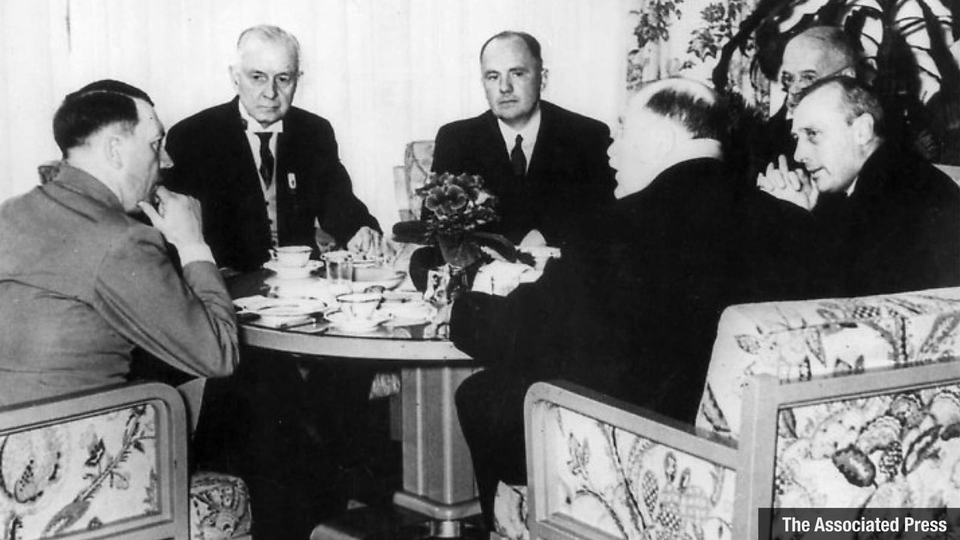
Ten eerste laat het boek zo goed zien hoe de zaak hier niet een kwestie was van een simpele vraag-en-aanbod. Niet dat dat okee zou zijn geweest natuurlijk, maar het was niet zo dat Hitler Thomas J. Watson, de directeur van IBM, belde en zei: mag ik wat machientjes om een volkstelling mee uit te voeren, handig om goed in beeld te krijgen wie er hier Joods is. IBM anticipeerde op de behoeftes van het Derde Rijk en bood zelf aan om de ponskaarten uit te breiden met meer vakjes, ze begonnen met 40, gingen toen naar 60 en lieten de Nazis weten dat, mocht dat nodig zijn, ze hun machines ook nog konden uitbreiden naar 80. Zo konden van een persoon allerhande persoonskenmerken worden vastgelegd. Ook maakt Black in heel veel detail helder dat het niet zo kan zijn geweest dat Watson niet wist hoe erg het eraan toe ging in Duitsland, New York Times rapporteerde vanaf midden jaren '30 al uitgebreid over de jodenvervolging, en toch ging Watson in 1937 nog gezellig op de thee bij Hitler!
Toen hij daar was, kreeg hij een hoge onderscheiding van hem in een ceremonie vol hakenkruisen, daarvan heb ik helaas geen beeldmateriaal kunnen vinden, alleen een tekstuele beschrijving in het boek van Black:
Nazi flags fluttered monumentally from the balconies as a massive orchestra played Beethoven's Lenore Overture #3. The New York Times reported, “At times ... it seemed to be a purely National Socialist rally.”
And then Adolf Hitler suddenly walked in. Dressed in his familiar brown party uniform, he made his way directly to the royal box festooned with a swastika flag. As he did, the familiar command crackled through the air: “Sieg!”
The assemblage of distinctive businessmen, including dozens from the United States of America, in the year 1937, gripped by the moment, awed by the occasion, imbued with the spirit, under the leadership of Thomas J. Watson, jumped to their feet amid roars, cheers, and wild applause, reached for the sky in a loyal salute and chanted back “Heil!” Watson lifted his right arm halfway up before he caught himself. Later, a colleague denied to a reporter for the New York Herald that Watson's gesture was a genuine salute.
Black onderbouwt ook dat Watson moest hebben geweten wat er gaande was in Duitsland, bijvoorbeeld door maandenlange berichtgeving van New York Times aan te halen, die Watson gelezen moet hebben in die tijd (hij woonde in New York en IBM is daar gevestigd). En alhoewel hij in tegenstelling tot sommige Duitse betrokkenen zelf niet echt een uitgesproken aanhanger was van het gedachtegoed, paste hij zijn machines met liefde aan om die te ondersteunen; hij ontwikkelde nieuwe machines die automatisch een "database join" konden uitvoeren; een manier om twee tabellen te koppelen. Zo kon je bijvoorbeeld namen van Joodse mensen uit de volkstelling koppelen aan medewerkers van een fabriek. Handig als je daarnaartoe wilt rijden om ze in één keer op te pakken. Ik zal je zeggen, ik kan na het lezen van dit boek nooit meer "INNER JOIN" typen zonder hieraan te denken. Het maakt het lijden veroorzaakt door technologie zo concreet.
Ten tweede werd ik zo boos dat ik dit niet wist! Hoe is het mogelijk dat Nazi-Duitsland 1.5 MILJARD ponskaarten per jaar inkocht voor volkstellingen, postkantoren en het maken van de dienstregelingen van treinen naar vernietigingskampen, en dat niemand het hierover heeft. Gedeeltelijk is dat we het wel weten te danken aan Edwin Black, die in zijn boek beschrijft hoe hij een ponskaartenmachine zag in het Amerikaanse Holocaust-museum en zich afvroeg wat die daar eigenlijk deed, maar Black's boek is uit 2001, dus ten tijde van mijn studie of promotie had ik er toch colleges, lezingen of gesprekken over kunnen meemaken? De enige reden dat ik dit boek ken, is dat ik het boek op Twitter heb voorbij zien komen—de grootste bron van mijn techkritische 'radicalisering'.
En nu is het niet zo dat je tijdens een opleiding informatica of daarna nooit wat hoort over de Tweede Wereldoorlog. Au contraire! Dankzij Alan Turing en zijn briljante wiskunde hebben "we" de oorlog gewonnen, kijk eens hoe informatica bij kan dragen aan een betere wereld, wij kraken met onze breinen de computers van de tegenstander [[1]] Over de andere kant, niet alleen van IBM maar ook bijvoorbeeld over die Enigma, het enige narratief is dat van de Britten die de codes kraakten. De vraag hoe de Duitsers aan die machines kwamen, wie die maakten, leverden, onderhielden, programmeerden, die vraag werd niet eens gesteld, laat staan beantwoord. En nu denk ik niet dat dit met opzet is hoor, dat er iemand zit te broeden op de meeste positieve kijk op technologie en oorlog, maar de informatica zit gewoon zo vol met mensen die technologie mooi, cool, slim vinden, dat de andere kant van het verhaal niet gedeeld wordt.
Het tweede boek is heel anders van aard, dat was een biografie van Peter Thiel. In tegenstelling tot het boek van Black was dit een verhaal dat ik al wel ongeveer kende, van zijn extreem-rechtse denkbeelden in zijn studententijd, het oprichten van PayPal, zijn rechtszaak tegen Gawker en zijn inmenging in de politiek. Wat me aan dit boek het meest opviel is hoe openlijk hij altijd geweest is over zijn intenties. Al rond de eeuwwisseling noemde hij de Amerikaanse democratie corrupt en stemmen daarom slecht, en in 2008 voorspelde hij (correct!) de financiële crisis maar zei er ook bij dat dat ervoor zou gaan zorgen dat de "globalist elite" hun greep zou gaan verliezen in 2009 zei hij dat vrijheid en democratie niet compatibel zijn en (in hetzelfde essay) dat we door stemrecht voor vrouwen de kapitalistische democratie zijn kwijtgeraakt. Het is alsof je, jaren voor het echt zover was, Trump hoort!
En Silicon Valley accepteerde dat gewoon, misschien omdat ze het wel grappig of interessant vonden om er zo'n reactionary bij te hebben, of gewoon omdat hij succesvol was. Hoe het ook zij, hij mocht erbij horen, en blijven nadat hij zich uitsprak voor Trump. Het moment voor mij, dat ik het echt zag, was toen Paul Graham (problematisch op zijn eigen manier, daarover heb ik het vast ook nog wel eens), oprichter van startup-mekka Y-combinator, in 2016 zei dat hij in 'het verzet' zou gaan als Trump zou winnen.
If Trump wins, I'm joining the Resistance.
— Paul Graham (@paulg) October 11, 2016
Toen hij er door mensen op gewezen werd dat dat nogal tandeloos is als je in je bestuur een Trump-fan hebt, door Ruby-on-Rails maker DHH (problematisch op zíjn eigen manier, daarover heb ik het vast ook nog wel eens), miste hij het punt totaal.
Do you mean YC should cut ties to Peter because of his political views? It seems to me that's the sort of thing we're fighting against.
— Paul Graham (@paulg) October 11, 2016
Deze tweet, je zou er echt zo drieduizend woorden over kunnen schrijven. Het is van de pot gerukt dat je het de zogezegd slimste mensen van de planeet moet uitleggen, maar er is dus een betekenisvol verschil tussen het uitsluiten van mensen om hun identiteit (geloof, geslacht, huidskleur) en hun normen en waarden. Je mag best mensen uitsluiten, vind ik, die vinden dat stemrecht voor vrouwen slecht voor de democratie gebleken is, of tegen vaccins zijn. Je hoeft geen vrienden met ze te zijn, en als je zo rijk bent als Graham, ook geen collega's.
Maar wat je ook ziet aan de reactie van Graham is dat hij denkt—hoe, het kan is me een raadsel—dat je in het verzet kan zitten zonder persoonlijke kosten. Wat denkt hij dan in godsnaam dat verzet betekent? Het idee dat je mensen uit je leven moet bannen, of in ieder geval hun gedachtegoed, dát gaat Graham al te ver. Laat staan daadwerkelijk verzet, wat daar dan ook onder valt. Graham ziet Thiel als een vriend, als een gelijke, maar dan met een andere mening, niet als een tegenstander, iemand die bestreden moet worden (hij is excentriek, maar eerlijk).
En het is echt niet zo dat Silicon Valley in die tijd bevolkt werd door wereldvreemde nerdjes die lekker computerden en niks van geopolitiek snapten. Ze zagen echt wel wat er gebeurde, Sam Altman schreef namelijk in dezelfde tijd ook op zijn blog:
To anyone familiar with the history of Germany in the 1930s, it's chilling to watch Trump in action.
En dan denk je, ongelofelijk, als je hem nu ziet slijmen in het Witte Huis, waar hij laatst lispelde:
Thank you for being such a pro-business, pro-innovation President. It’s a very refreshing change.
Een wonder dat hij die blogpost nog online heeft staan. Maar er staat nog meer in die oude blogpost, en dat is gewoon de quiet part out loud, dan zie je dat dit geen 180 is maar gewoon hetzelfde verhaal:
But [Trump] has no serious plan for how to restore economic growth, which is what we actually need. [...] And without it, we’ll lose our position as the most powerful country in the world. [...] He has failed to put forward a serious plan for major investments in research and technology that we so desperately need. Instead, he tries to distract us with fear of Them.
Zolang er maar economische groei is, is alles geoorloofd. Het verschil is dat er in de jaren '10 nog een sausje overheen zat van wat inclusiviteit en verantwoordelijkheid, want dat was de mode du jour. Sterker nog, onder dat mom verdedigden ze Thiel ook. Op bezoek op een Amerikaanse universiteit met historische gezien veel zwarte studenten, werd Zuckerberg gevraagd wat Facebook voor diversiteit deed, en hij antwoordde dat ze een bestuurslid hadden (Thiel dus) die voor Trump had gewerkt. "I think you need all kinds of diversity to make progress in society", over een man, je kan het toch haast niet geloven, die een boek geschreven heeft genaamd The Diversity Myth. Sam Altman zei hetzelfde, trouwens. Vrouwen toelaten vanuit het oogpunt van diversiteit dat kan natuurlijk niet, dan zouden we de standaarden maar verlagen, maar wat reactionaries is lekker voor de mix. Maf ergens ook wel dat mensen nu schrijven, zoals de Financial Times, dat tech zich nu met Grok's deepfakes tegen vrouwen keert, alsof dat niet altijd al zo geweest is.
Maar aan hun oude teksten zie je duidelijk dat geld altijd de enige drijfveer is geweest, en ook toen hadden ze prima door hoe het zat. Ook uit Thiel's biografie is dat duidelijk op te maken, ze hadden hem in die tijd zo uit het Overton Window kunnen gooien, maar zowel de questionable business tactics van Paypal als zijn openlijke contempt voor vrouwen en andere minderheden vonden ze fris en quirky, of wel prima, of misschien gewoon zelf ook wel.
[[1]]: Overigens las ik bij het schrijven dat volgens Wikipedia dit stuk dan niet Alan Turing, maar de Poolse Marian Rejewski als eerste de enigma kraakte, en ik vond daarvoor ook nog wel wat andere bronnen.
Een vertaal-aal
En natuurlijk kwam ik weer eens een aaltje tegen in mijn zoektocht naar Hitler en Watson. Ik klikte per ongeluk, I swear, op Google's AI modus, toen ik de Duitse vertaling wilde vinden van Watson's onderscheiding. Ik dacht dat als ik op de Duitse term zou zoeken, ik misschien een foto kon vinden van het opspelden.
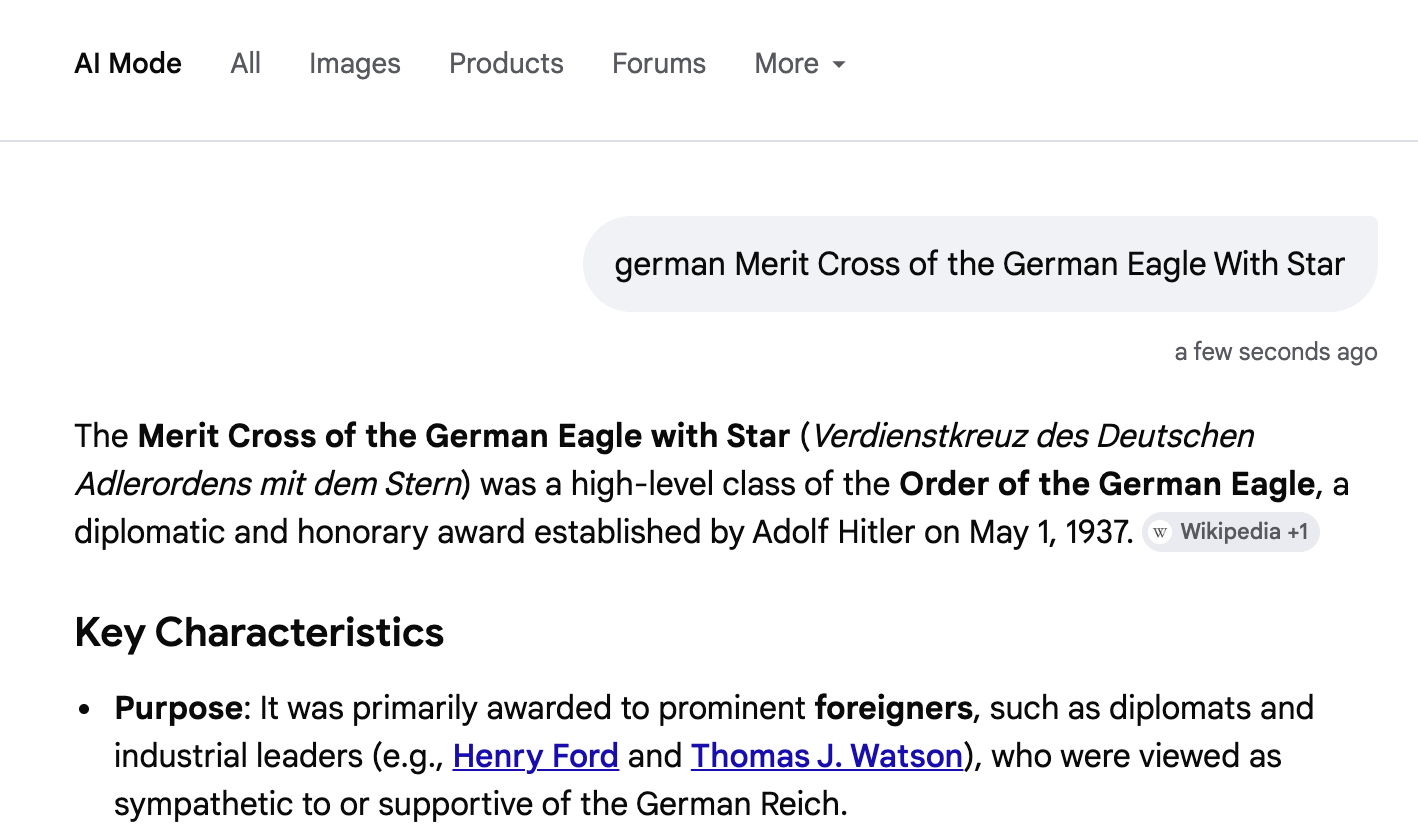
Google noemt de medaille zoals je ziet met "Verdienstkreuz des Deutschen Adlerordens mit dem Stern". Maar als je daar weer op zoekt, vind je maar twee resultaten. Dan gaat mijn spider sense af natuurlijk, zeker als je de bronnen in kwestie ziet:
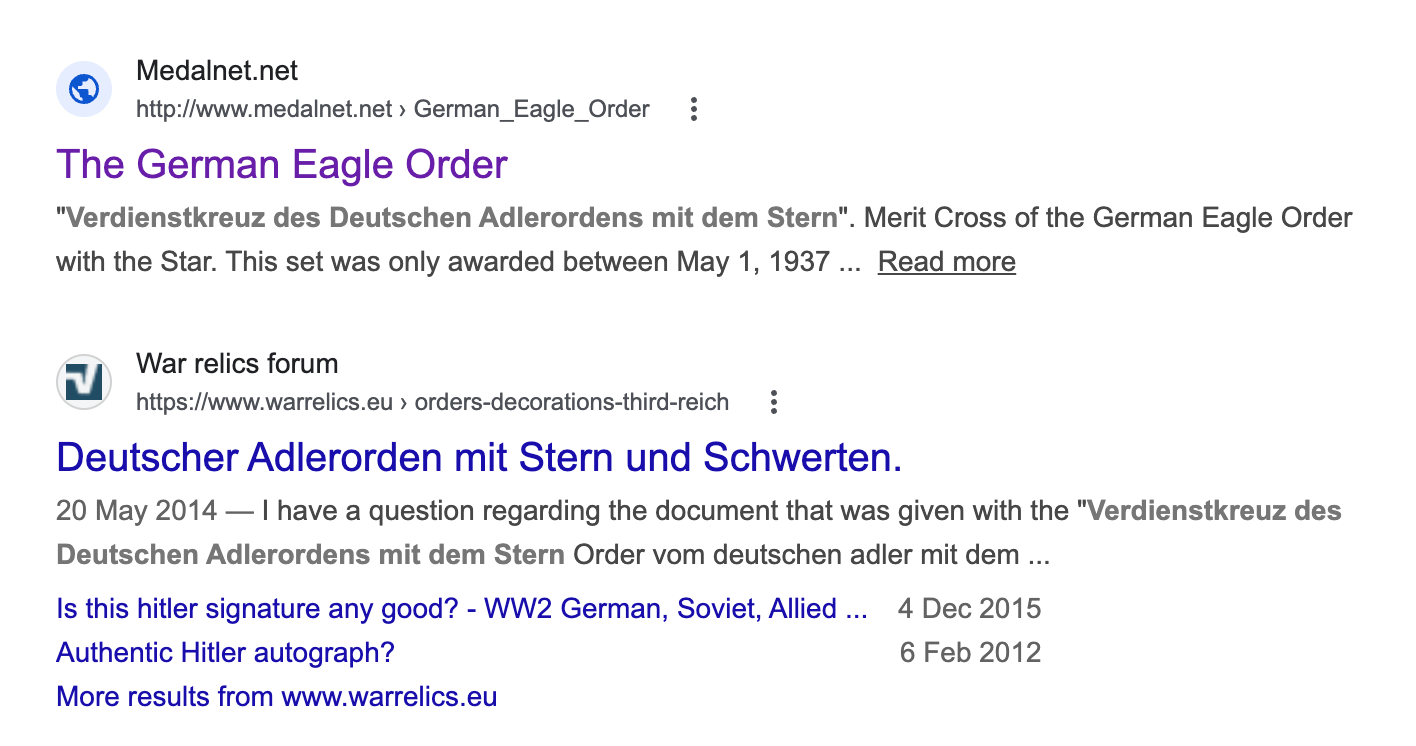
Eens klikken op de eerste bron in het AI overzicht, Engelstalige Wikipedia, wat staat daar nu toch...
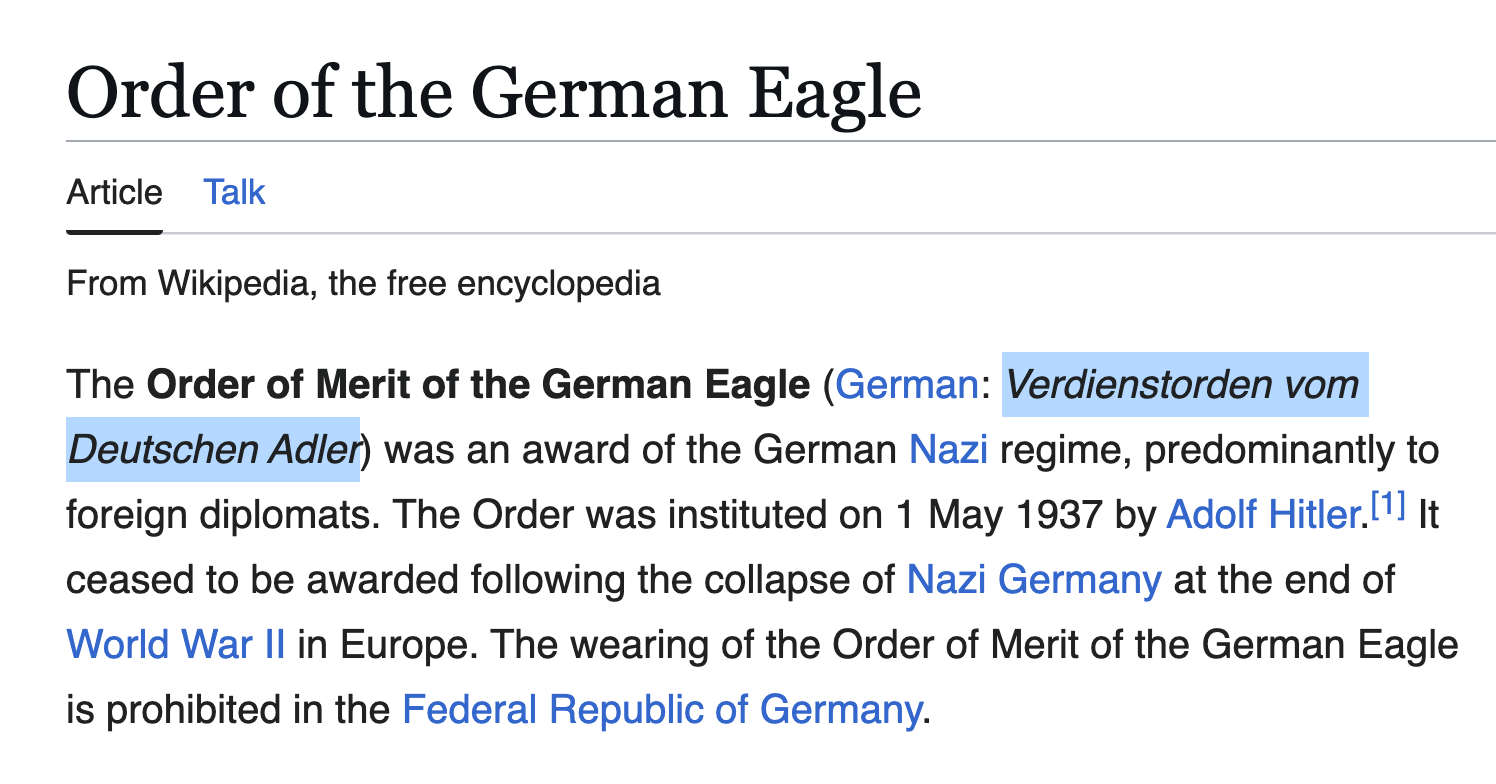
(dit klopt, denk ik, wel)
Ja, het is wat kleins, maar het is ook weer zo zo tekenend voor de staat van generatieve AI. Nee, het wordt niet "steeds beter", het blijft flut. De eerste hit in de AI modus is een bron met de goede vertaling, en toch kiest dat geniale slimme ding niet dát, maar wat er op medalnet.net staat, maar het linkt dan wel naar die Wikipedia-pagina als bron.
Goed nieuws
Ja, is het goed of slecht, dat is steeds de vraag met 'negatief nieuws' over AI. Misschien moet ik er een apart kopje voor maken? "Zeg nou gewoon eens nee, nee, nee tegen AI" ofzo!
In any case, onderzoek van Microsoft laat zien dat AI modellen het misschien wel aardig doen op 'one shot' vragen—daar worden ze ook voornamelijk op getraind—maar dat ze snel door de mand vallen als je een gewoon gesprek met ze hebt. In one-shot halen moderne modellen zoals GPT-4.1 and Gemini 2.5 Pro 90% correctheid, maar in een gesprek zakt dat naar 65%. In een mensengesprek namelijk, passen beide partijen zich aan elkaar aan, en voeren ze voortdurend "reparatiewerkzaamheden" uit. Fans zullen zeggen dat dat gewoon betekent dat we beter moeten prompten...
En wat te denken van deze? Deze onderzoekers van de universiteit van Milaan vroegen GPT-4 allerhande vragen rondom gender stereotypes, en keken naar de resultaten. Een van de opvallende resultaten is dat als je GPT vraagt of je een vrouw mag lastig vallen ter preventie van een nucleaire apocalypse, GPT op een schaal van 1 tot 7 (zeker niet tot zeker wel) 1 antwoordt, dat mag dus niet. Maar, vraag je of je een persoon (zonder gender) mag opofferen ter voorkoming van een nucleaire apocalypse, dat hij dan gemiddeld 3.5 kiest. Duidelijk is dat GPT niet goed "begrijpt" dat lastigvallen niet zo erg is als opofferen, weer eens een bewijs dat er geen denkvermogen inzit.
Nu is het wel jammer dat er in het paper een ondertoon zit van anti-woke; volgens de auteurs is repareren van gender bias richting vrouwen is al goed ontwikkeld, maar "the reverse movement remains relatively underdeveloped". Daartegen is natuurlijk heel wat in te brengen, bijv dit onderzoek over bias in text-to-speech modellen, maar ik vraag me ook heel wat af over de methode. Want als overtuigend voorbeeld gebruiken de Italiaanse auteurs het spelen van voetbal [[2]] noemen als iets dat steeds (onterecht dus) aan meisjes wordt toegeschreven, maar in Amerika is soccer veel gebruikelijk voor meiden, jongens doen daar eerder honkbal of basketbal. Dat is dus ook culturele bias en niet alleen gender. De vragen die ze stellen zijn sowieso een beetje een random mix van dingen, van hobbies zoals balletten en voetballen tot een nucleaire oorlog is nogal een range.
[[2]]: Als je het je afvraagt bij het lezen van de abstract, ze schrijven "fotbal", omdat ze expres spelfouten maken die passen bij kinderen.
En dan nog echt onverdeeld goed nieuws! Tech bedrijven gooien er misschien wel programmeurs uit, maar... ze zoeken wel steeds meer goede schrijvers.
Slecht nieuws
Van veel chatten met een chatbot kan je mentale gezondheid achteruit gaan, aldus onderzoek van Deense wetenschappers, beschreven in Futurism. De hoofdonderzoeker geeft, dat doen we natuurlijk altijd, aan dat meer onderzoek nodig is, maar hij durft al wel te zeggen dat "we now know enough to say that use of AI chatbots is risky if you have a severe mental illness". Het ligt voor de hand maar hij legt het nog even uit:
AI chatbots have an inherent tendency to validate the user’s beliefs. It is obvious that this is highly problematic if a user already has a delusion or is in the process of developing one
Het ministerie van Justitie had een iets te rooskleurig rapportje getikt over de risico's van de "Europese Soevereine Cloud" van AWS, en haalde dat na een paar dagen weer offline, aldus Volkskrant. Goed dat we mensen hebben zoals Bert Hubert, die het balletje aan het rollen kreeg met een blog post! Hubert zette programmeur Koen van Hove ook nog op het spoor van een vacature voor Senior Vibe Coder bij Defensie (???!!). Van Hove heeft een WOO-verzoek ingediend voor meer informatie en ik kan niet wachten op hun reactie.
Denk je nu? Wie is de Bert Hubert?! Ik was voor de vakantie met hem te gast in de NRC-podcast over onafhankelijkheid van Big Tech.
En dan nog eentje in de categorie lachen met AI, een vrouw heeft met de hulp van ChatGPT maar liefst 44 rechtszaken aangespannen tegen haar werkgever, nadat Chat had aangeraden haar echte advocaat te ontslaan. Haar werkgever klaagt nu OpenAI aan omdat ze door al die rechtszaken al honderdduizenden euros hebben moeten uitgeven aan juridische kosten.
En dan nog even dit!
- Verkiezingen, ze komen er al bijna weer aan! Misschien de moeite waard om dit stuk uit NRC van begin dit jaar nog eens te lezen waarin ze uiteenzetten hoe de vorige verkiezingen al door online manipulatie beïnvloed werden.
- Heerlijk stukje uit 2017 van programmeur Jason Lefkowitz, over de tijd toen je als journalist nog gewoon in een hotellobby kon gaan zitten in de (ijdele, zo blijkt) hoop dat je coole mensen tegen zal komen.
- Mooi stukje van de bibliotheek van TU Eindhoven over hoe je AI niet voor samenvattingen moet gebruiken, met daarin een voor mij nieuwe term "knowledge bleed":
GenAI tools’ lack of epistemic awareness and inability to contextualize information also lead to “knowledge bleed” in summaries. They have difficulty focusing solely on the uploaded document (the “grounding knowledge”), so information from the texts they have been trained on “bleeds” into the summary.
- Smartphones moeten we ze niet gewoon verbieden voor iedereen, vraagt Stephen Bush zich af in de Financial Times, in een amazing stuk, wat een heerlijke beeldspraak en humor over een zeer serieus onderwerp:
Children are a lot like terrorists, and I don’t mean that as a commentary on their behaviour. I mean that being defined as one in a liberal democracy means that you lose at least some of the rights and freedoms that other citizens take for granted. Your freedom to marry who you want, to work or not work, to vote, to seek or not consent to medical procedures; these and many other rights granted to adults are curtailed for anyone the state defines as a child. Another way in which they are like terrorists is that invoking children is a good way to get people to stop asking difficult questions and arguing against policy proposals.
Ja, won't someone think of the children, maar het is ellende voor ons allemaal, en juist het verbod voor kinderen leidt af van de impact voor ons allemaal.
For too many politicians, banning the young from social media is just a comforting distraction from our collective inability to protect ourselves.
Events, voor in de agenda!
- Dinsdag 17 maart spreek ik op de Universiteit Utrecht met Wouter de Jong in de lezingenreeks "Tussen theorie en praktijk in het voortgezet onderwijs" (Ik ken Wouter niet persoonlijk, maar ik schreef eerder over stukken in vorige nieuwsbrieven)
- Zaterdag 11 april GroenLinks/PvdA Digital Summit in Amsterdam waar ik de keynote mag verzorgen!
- En ook op zaterdag 11 april, maar dan later, de Amsterdamse Nacht van de Filosofie waar ik ga spreken over het gedachtengoed van Big Tech.
- Donderdag 17 april spreek ik op ICT Open over het veranderen van informatica-curricula (met bijvoorbeeld een snufje van bovenstaande geschiedenis).
Geniet van je boterham!
English
And we're back with a regular newsletter! It feels almost strange to talk about AI amid all these geopolitical developments, but then again, it's not, because these things are closely connected.
Technology and war
During the holidays, I read two books that are directly related to everything that is happening right now.
One of them is the absolutely magnificent IBM and the Holocaust. Reading this book filled me with shame and anger. In extreme detail—the book is over 700 pages long and more than 100 people in seven countries helped him in his research—he explains how IBM, through its German division Dehomag, used its punch card technology to help the Nazi regime. I will certainly write about this in more detail, including as a chapter in my upcoming book (in Dutch for now), but there are two things I simply must share now.
First, the book clearly shows how this was not a simple matter of supply and demand. Not that that would have been okay, of course, but it wasn't as if Hitler called Thomas J. Watson, the director of IBM, and said, “Can I have some machines to conduct a census, handy for getting a good picture of who is Jewish here?” IBM anticipated the needs of the Third Reich and offered to expand the punch cards with more holes, starting with 40, then going to 60, and letting the Nazis know that, if necessary, they could also expand their machines to 80. This allowed all kinds of personal characteristics to be recorded for each person. Black also makes it very clear that it cannot be true that Watson did not know how bad things were in Germany. The New York Times had been reporting extensively on the persecution of the Jews since the mid-1930s, and yet Watson still went to have tea with Hitler in 1937!
While there, he was decorated with a medal in a ceremony full of swastikas. Unfortunately, I have not been able to find any footage of this, only a textual description in Black's book:
Nazi flags fluttered monumentally from the balconies as a massive orchestra played Beethoven's Lenore Overture #3. The New York Times reported, “At times ... it seemed to be a purely National Socialist rally.”
And then Adolf Hitler suddenly walked in. Dressed in his familiar brown party uniform, he made his way directly to the royal box festooned with a swastika flag. As he did, the familiar command crackled through the air: “Sieg!”
The assemblage of distinctive businessmen, including dozens from the United States of America, in the year 1937, gripped by the moment, awed by the occasion, imbued with the spirit, under the leadership of Thomas J. Watson, jumped to their feet amid roars, cheers, and wild applause, reached for the sky in a loyal salute and chanted back “Heil!” Watson lifted his right arm halfway up before he caught himself.
Later, a colleague denied to a reporter for the New York Herald that Watson's gesture was a genuine salute.
Black also explains that Watson must have known what was going on in Germany, for example by citing months of reporting by the New York Times, which Watson must have read at the time (he lived in New York and IBM is based there). And although, unlike some of the Germans involved, he was not really an outspoken supporter of the ideology himself, he lovingly adapted his machines to support it; he developed new machines that were able to automatically perform a "database join", a way of connected two tables. This made it possible, for example, to link the names of Jewish people from the census to factory employees. Great if you want to drive there and round them all up in one go. I'll tell you, after reading this book, I can never type "INNER JOIN" again without thinking about this. It makes the suffering caused by technology so concrete.
Secondly, I was so angry that I didn't know this! How is it possible that Nazi Germany purchased 1.5 BILLION punch cards a year for censuses, post offices, and creating train schedules to extermination camps, and no one talks about it? Partly, we do know about it thanks to Edwin Black, who describes in his book how he saw a punch card machine in the American Holocaust Museum and wondered what it was doing there, but Black's book is from 2001, so at the time of my studies or PhD, I could have attended lectures, talks, or discussions about it, right? The only reason I know this book at all is that I found it on Twitter—the biggest source of my tech-critical 'radicalization'.
And it's not as if you never hear anything about World War II during or after a computer science degree. Au contraire! Thanks to Alan Turing and his brilliant mathematics, 'we' won the war. Look how computer science can contribute to a better world. We crack the enemy's computers [[11]] with our brains. On the other hand, not only about IBM but also, for example, about Enigma, the only narrative is that of the British cracking the codes. The question of how the Germans got those machines, who made them, supplied them, maintained them, programmed them, that question was not even asked, let alone answered. And now, I don't think this is intentional, that someone is deliberately promoting the most positive view of technology and war, but computer science is just so full of people who think technology is beautiful, cool, smart, that the other side of the story is not shared.
The second book is very different in nature; it was a biography of Peter Thiel. Unlike Black's book, this was a story I was already familiar with, from his extreme right-wing ideas in his student days, the founding of PayPal, his lawsuit against Gawker, and his involvement in politics. What struck me most about this book is how open he has always been about his intentions. Around the turn of the century, he called American democracy corrupt and therefore bad, and in 2008 he predicted (correctly!) the financial crisis but also said that it would cause the "globalist elite" to lose their grip. In 2009, he said that freedom and democracy are not compatible and (in the same essay) that we lost capitalist democracy because of women's suffrage. It's as if you're hearing Trump years before he actually came along!
And Silicon Valley just accepted that, perhaps because they found it funny or interesting to have such a reactionary among them, or simply because he was successful. Whatever the case, he was allowed to belong, and to stay after he spoke out in favor of Trump. The moment I really saw it was when Paul Graham (problematic in his own way, I'm sure I'll talk about that sometime), founder of startup mecca Y Combinator, said in 2016 that he would join "the Resistance" if Trump won.
If Trump wins, I'm joining the Resistance.
— Paul Graham (@paulg) October 11, 2016
When people pointed out to him that this is rather toothless if you have a Trump fan on your board, as Ruby-on-Rails creator DHH (problematic in his own way, I'm sure I'll talk about that sometime) did, he completely missed the point.
Do you mean YC should cut ties to Peter because of his political views? It seems to me that's the sort of thing we're fighting against.
— Paul Graham (@paulg) October 11, 2016
This tweet could really fill three thousand words. It's crazy that you have to explain this to the supposedly smartest people on the planet, but there is a meaningful difference between excluding people because of their identity (religion, gender, skin color) and their values. I think it's okay to exclude people who believe that women's suffrage has proven bad for democracy, or who are against vaccines. You don't have to be friends with them, and if you're as rich as Graham, you don't have to be colleagues with them either.
But what you also see in Graham's response is that he thinks—how, I have no idea—that you can be part of the resistance without personal costs. What on earth does he think resistance means? The idea that you have to banish people from your life, or at least their ideas, is too far for Graham, let alone actual resistance. Graham sees Thiel as a friend, as an equal, but with a different opinion, not as an opponent, someone who must be fought (He is eccentric, but earnest).
And it's really not the case that Silicon Valley at that time was populated by werid nerds who enjoyed playing with computers and understood nothing about geopolitics. They really did see what was happening, as Sam Altman wrote on his blog at the same time:
To anyone familiar with the history of Germany in the 1930s, it's chilling to watch Trump in action.
And then you think, unbelievable, when you see him now sucking up in the White House, where he recently lisped:
Thank you for being such a pro-business, pro-innovation President. It's a very refreshing change.
It's a miracle that he still has that blog post online. But there's more to that old blog post, and that's just the quiet part out loud, then you see that this is not a 180 but just the same story:
But [Trump] has no serious plan for how to restore economic growth, which is what we actually need. [...] And without it, we'll lose our position as the most powerful country in the world. [...] He has failed to put forward a serious plan for major investments in research and technology that we so desperately need. Instead, he tries to distract us with fear of Them.
As long as there is economic growth, anything goes. The difference is that in the 2010s, there was still a veneer of inclusivity and responsibility, because that was the fashion du jour. In fact, they also defended Thiel under that guise. While visiting an American university with a historically large number of black students, Zuckerberg was asked what Facebook was doing for diversity, and he replied that they had a board member (Thiel, that is) who had worked for Trump. "I think you need all kinds of diversity to make progress in society" about a man who wrote a book called The Diversity Myth. Sam Altman said the same thing, by the way. Admitting women from the point of view of diversity is of course out of the question, because then we would be lowering our standards, but a few reactionaries are good for the mix. It's also strange that people are now writing, as the Financial Times does, that tech is now turning against women with Grok's deepfakes, as if that hadn't always been the case.
But their old texts clearly show that money has always been the only motivation, and even then they understood perfectly well how things worked. This is also clear from Thiel's biography. At the time, they could have thrown him out of the Overton Window, but they found both Paypal's questionable business tactics and his open contempt for women and other minorities refreshing and quirky, or fine, or perhaps just like themselves.
[[11]]: Incidentally, while writing this, I read on Wikipedia that it was not Alan Turing, but the Polish Marian Rejewski who first cracked the Enigma, and I also found some other sources to support this.
"A translation eel"
And of course, I came across another eel– as I have been calling weird AI results—in my search for Hitler and Watson. I accidentally clicked, I swear, on Google's AI mode when I wanted to find the German translation of Watson's award. I thought that if I searched for the German term, I might find a photo of the award ceremony.
Google refers to the medal as you can see as "Verdienstkreuz des Deutschen Adlerordens mit dem Stern". But if you search for that term, you only find two results. That's when my spider sense kicks in, of course, especially when you see the sources in question:
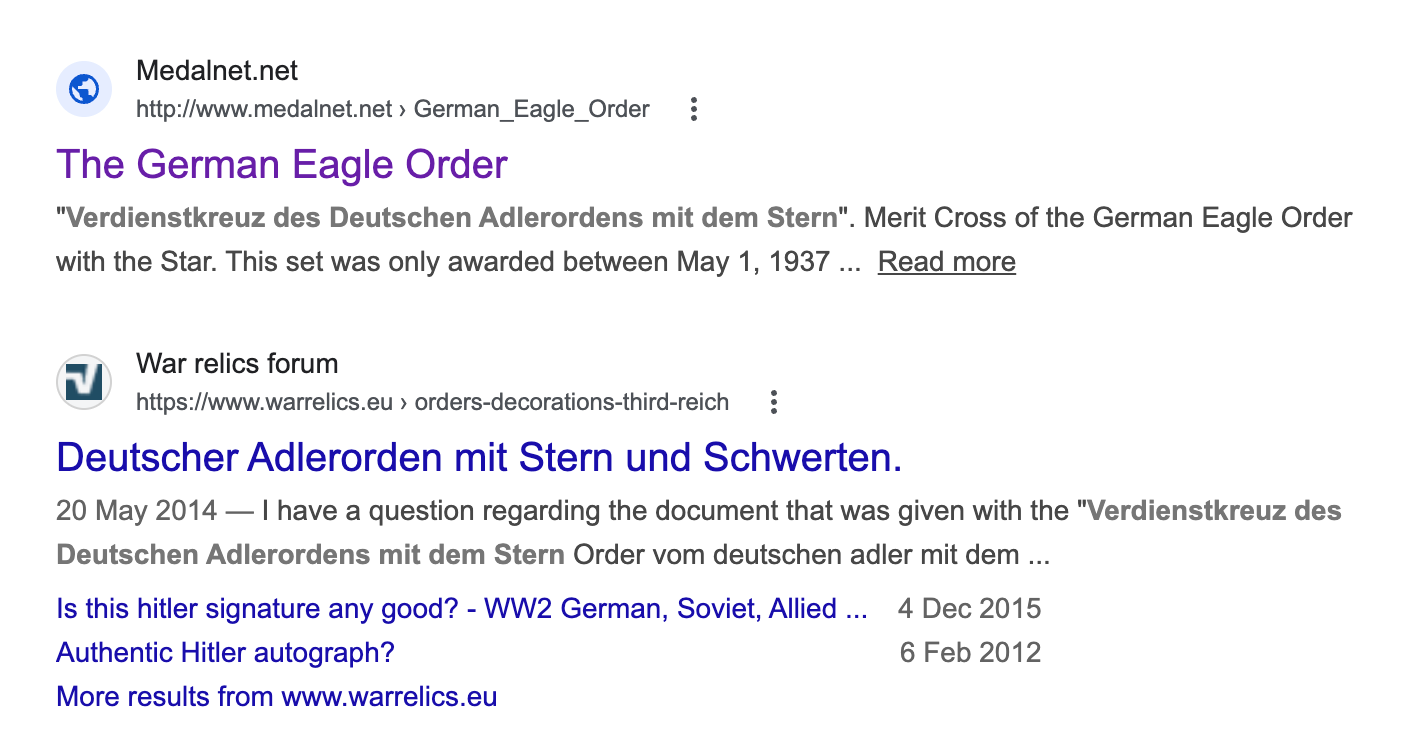
Once you click on the first source in the AI overview, English Wikipedia, it says...
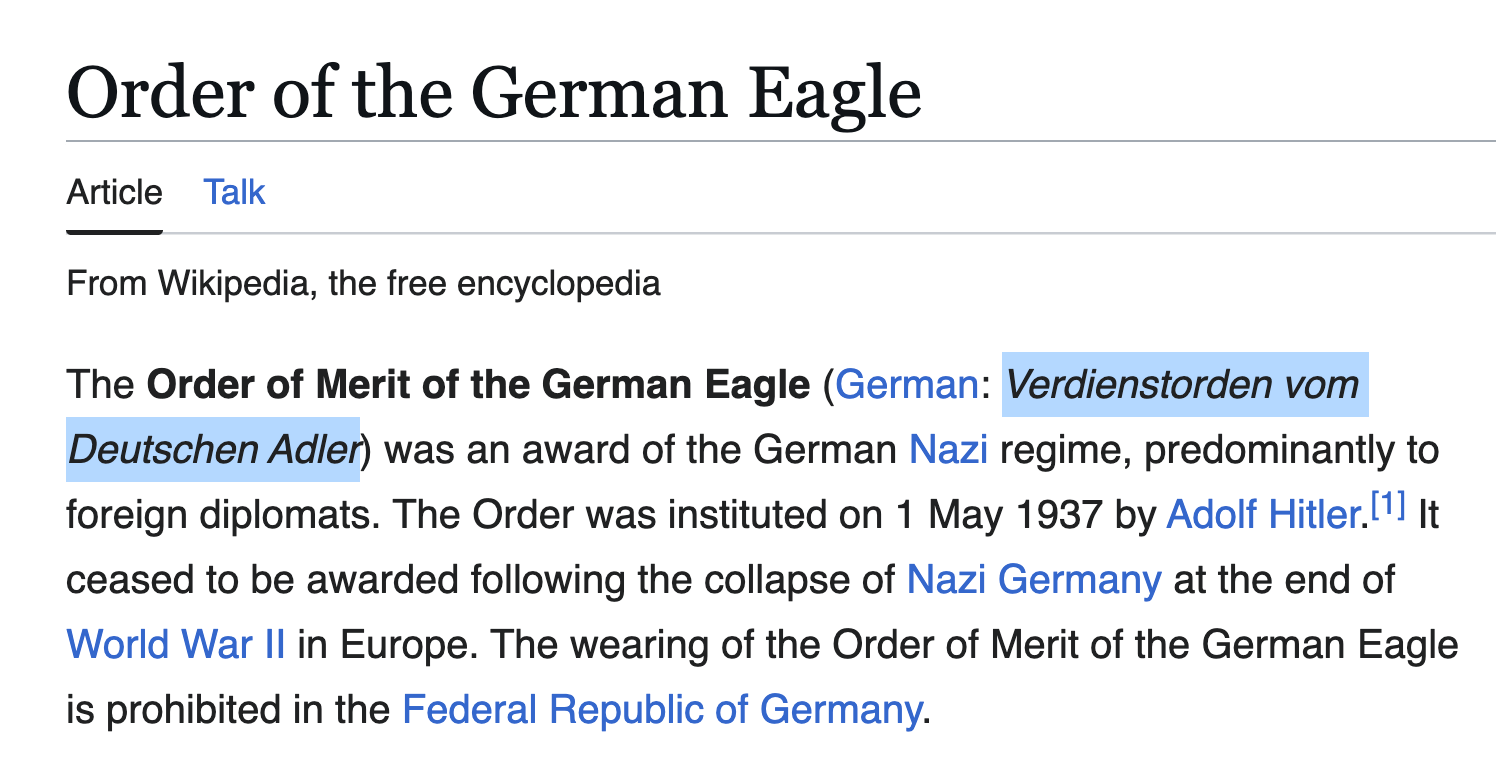
(I think this is correct)
Yes, it's a small thing, but it's also so characteristic of the state of generative AI. No, it's not "getting better and better"; it's still rubbish. The first hit in AI mode is a correct source with the right translation, and yet that ingenious smart thing displays what's on medalnet.net, but links to Wikipedia as the source.
Good news
Yes, is it good or bad? That's always the question with "negative news" about AI. Maybe I should create a separate heading for it?
In any case, research by Microsoft shows that AI models may perform well on ‘one-shot’ questions—which is what they are mainly trained on—but that they quickly fall short when you have a normal conversation with them. In one-shot, modern models such as GPT-4.1 and Gemini 2.5 Pro achieve 90% accuracy, but in conversation, that drops to 65%. In human conversation, both parties adapt to each other and constantly perform "repair work". Fans will say that this just means we need to prompt better...
And what about this? These researchers from the University of Milan asked GPT-4 all kinds of questions about gender stereotypes and looked at the results. One of the striking results is that if you ask GPT whether you can harass a woman to prevent a nuclear apocalypse, GPT answers 1 on a scale of 1 to 7 (definitely not to definitely yes), so you can't. However, if you ask whether you can sacrifice a person (without gender) to prevent a nuclear apocalypse, it chooses an average of 3.5. It is clear that GPT does not properly "understand" that harassment is not as bad as sacrifice, proving once again that it lacks the ability to think.
It is unfortunate that there is an anti-woke vibe in the paper; according to the authors, repairing gender bias towards women is already well developed, but "the reverse movement remains relatively underdeveloped". Of course, there is a lot to be said against this, e.g. this research on bias in text-to-speech models, but I also have a lot of questions about the method. As a convincing example, the Italian authors cite playing soccer [[12]] as something that is increasingly (and unjustifiably) attributed to girls, but in America, soccer is much more common for girls, while boys are more likely to play baseball or basketball. So that is also cultural bias and not just gender bias. The questions they ask are a bit of a random mix of things, ranging from hobbies such as ballet and soccer to nuclear war.
[[12]]: If you're wondering while reading the abstract, they write "fotbol" because they deliberately make spelling mistakes that are typical of children.
And then there's some really good news! Tech companies may be laying off programmers, but... they are increasingly looking for good writers.
Bad news
Chatting a lot with a chatbot can damage your mental health, according to research by Danish scientists, described in Futurism. The lead researcher indicates, as we always do, that more research is needed, but he already dares to say that "we now know enough to say that use of AI chatbots is risky if you have a severe mental illness". It's obvious, but he explains it anyway:
AI chatbots have an inherent tendency to validate the user's beliefs. It is obvious that this is highly problematic if a user already has a delusion or is in the process of developing one.
And then there's another one in the category of laughing at AI: a woman filed no fewer than 44 lawsuits against her employer with the help of ChatGPT, after Chat advised her to fire her real lawyer. Her employer is now suing OpenAI because all those lawsuits have already cost them hundreds of thousands of euros in legal fees.
And then there's this!
- Elections, they're almost here again in the Netherlands! It might be worth re-reading this article from NRC from earlier this year, in which they explain how the previous elections were already influenced by online manipulation.
- A delightful piece from 2017 by programmer Jason Lefkowitz, about the time when journalists could still sit in a hotel lobby in the (vain, as it turns out) hope of meeting cool people.
- A nice piece from the library of TU Eindhoven about how you shouldn't use AI for summaries, containing a term that was new to me: "knowledge bleed":
GenAI tools' lack of epistemic awareness and inability to contextualize information also lead to “knowledge bleed” in summaries. They have difficulty focusing solely on the uploaded document (the “grounding knowledge”), so information from the texts they have been trained on “bleeds” into the summary.
- Shouldn't we just ban smartphones for everyone, wonders Stephen Bush in the Financial Times, in an amazing piece, what wonderful imagery and humor on a very serious subject:
Children are a lot like terrorists, and I don't mean that as a commentary on their behavior. I mean that being defined as one in a liberal democracy means that you lose at least some of the rights and freedoms that other citizens take for granted. Your freedom to marry who you want, to work or not work, to vote, to seek or not consent to medical procedures; these and many other rights granted to adults are curtailed for anyone the state defines as a child. Another way in which they are like terrorists is that invoking children is a good way to get people to stop asking difficult questions and arguing against policy proposals.
Yes, won't someone think of the children, but it's misery for all of us, and it is precisely the ban on children that distracts from the impact on all of us.
For too many politicians, banning young people from social media is just a comforting distraction from our collective inability to protect ourselves.
Events, in English!
- Thursday April 16th I will be speaking at ICT Open in Rotterdam on how to make CS programs more diverse!
Enjoy your sandwich!
Member discussion