AI in week 4
English version online/below!
Friction-maxxing
Ok, het is nog vroeg in het jaar, maar dit stuk in The Cut durf ik nu al wel uit te roepen tot één van mijn favorieten. Kathryn Jezer-Morton, die gewoonlijk columns over ouderschap schrijft, maar nu een uitstapje maakt naar de digitale wereld, en met succes dus. Big tech is volgens haar op een missie om het leven zo makkelijk mogelijk te maken:
Reading is boring; talking is awkward; moving is tiring; leaving the house is daunting. Thinking is hard. Interacting with strangers is scary.
Maar, zegt Jezer-Morton, die frictie-verwijderende tools dehumaniseren ons door alles wat ons mens maakt, uit te wissen. We worden als gansjes in farm de hele tijd slop gevoerd, en we weten niet meer hoe we eruit kunnen komen om zelf een eitje te bakken. Haar goede voornemen, en ik sluit me daar totaal bij aan, is "friction-maxxen": dingen niet makkelijker, maar moeilijker maken. Het is niet alleen dingen zonder telefoon doen, het gaat om accepteren dat je brein niet de godganse dag geprikkeld hoeft te worden met scrolldopamine:
Friction-maxxing is not simply a matter of reducing your screen time, or whatever. It’s the process of building up tolerance for “inconvenience”
Als iemand zonder mobiele telefoon kan ik dit natuurlijk alleen maar 100% toejuichen. Pas als je een keer op een terrasje zit en je niet meteen afleiding in je zak hebt, kom je erachter hoe verslaafd je bent, maar ook hoe makkelijk het is om een praatje te maken, om je heen te kijken, te denken of gewoon niks te doen.
Maar het is ook zo verleidelijk, je moet iets doen, een stuk schrijven bijvoorbeeld, maar beginnen is moeilijk, dat is dus de frictie die nodig is, maar beginnen aan een grote taak is lastig als er dan over afleiding is. Schrijfster Laura van den Berg (ondanks de naam een Amerikaanse) heeft een concrete tip in een post over hoe ze een roman schrijft: begin met iets heel kleins.
This is the point where I feel a lot of writers become overwhelmed. I have a headful of ideas and a shit ton of voice memos: where do I even begin? And this is where I think it can be really helpful to start with small, tactile steps. For me that meant I started by transcribing the voice memos. I listened to them and I typed them up. Simple. A task with a clear purpose and end point.
Je kunt, met andere woorden, frictie ook verminderen door de taken kleiner te maken ipv door jezelf de hele tijd af te leiden. Lukt het niet om een lang stuk in één ruk te lezen? Lees dan de helft. Dat is nog altijd beter dan doelloos scrollen.
Voor Jezer-Morton echter gaat het dus echt verder dan alleen maar stoppen met je telefoon en chatGPT. Je leven hoeft niet perfect, leer leren met de frictie die imperfectie oproept.
An orientation toward friction is really the only defense we have against the life-annihilating suction of technologies of escape. Without friction, most kids will have no reason to love reading, let alone thinking for themselves. If you’re tired of thinking about “screen time,” and who isn’t, maybe you need to reorient in terms of friction instead.
Hoewel haar advies misschien een tikje extreem is—"Quit your job; toss your tablet; drive for a week; upset your kids" daarbij vergeleken ben ik opeens geen helemaal niet meer radicaal?—begreep ik door haar pleidooi eindelijk wat me zo ergert aan de "smartphonevrij opgroeien"-roepers [[1]]. Ze missen een coherent verhaal over wat wél. Wat missen we door de telefoon, want moeten we ervoor in de plaats willen?
De voortdurende focus op "de telefoon" houdt buiten beeld waar probleem echt zit, en dat is niet bij het apparaat. Het zijn de apps erop, die doen het ons aan! Zo liet onderzoek onder professionele volleyballers in 2022 zien dat ze na een half uur op Instagram aantoonbaar minder oog-handcoördinatie kregen, maar de controlegroep die tv keek, had dat niet! Een vergelijkbaar onderzoek dat uit 2021 vergeleek social media met het kijken van een documentaire, daaruit bleek ook dat alleen social media mentale vermoeidheid tot gevolg had, zoveel vermoeidheid dat de social media groep ook fysiek minder krachttraining aankon na afloop! En frappant resultaat misschien ook nog van dat tweede onderzoek, er was geen verschil in de gerapporteerde vermoeidheid! Dus deelnemers voelden zich niet moe, maar waren het wel.
Het mooie aan het verhaal van Jezer-Morton vind ik dat zij de schuldige wel correct aanwijst: niet de telefoon zelf, maar big tech die ons verslaafd maakt. En bij het friction-maxxen hoeft die tablet (van mij) helemaal het raam niet uit. Want op je telefoon kan je ook gewoon een documentaire kijken die je dus niet vermoeit, en er zijn ook genoeg leuke puzzelspellen, rekenoefenapps of echt goede games die frictie bieden om echt van te genieten en van te leren, of echt heerlijk bij te ontspannen.
Mijn man en ik doen iedere avond NYT Connections, een Engelstalig woordpuzzelspel, en dat is frictie pur sang; regelmatig lopen we vast omdat we een woord niet kennen, of een echt Amerikaans fenomeen (Wat hebben een vogel, een kerkelijke, een basketbalspeler en een football-speler gemeen? Het kunnen allemaal cardinals zijn!), maar het plezier dat we eruit halen om samen verbanden te leggen, komt door mentale inspanning, en uit de heerlijke ontlading als je na minuten staren een oplossing ziet.
Het is een totaal ander gebruik van een telefoon dan doomscrollen dat een heel gelijkmatige emotionele ervaring biedt, constant maar eindeloos, terwijl er van Connections iedere dag maar één puzzeltje beschikbaar is, dus op is op en daarna gaan we weer wat anders doen.
En wat las ik, toen ik dit hele stuk al had geschreven, in Trouw, niet als gewone opinie maar als stuk van de hoofdredactie zelfs?
Studeren is een uiterst leerzame worsteling. Hoe stroever het gaat, hoe dieper soms de inzichten. Door intellectuele moeite te doen, kun je jezelf leren kennen.
[...]
Morele en ethische scholing volgt alleen uit een doorleefde studietijd met docenten en medestudenten die het je soms lastig maken.
Ze wijzen hier ook naar recent onderzoek van Izaak Dekker, die laat zien dat de collegebankjes steeds leger worden en studenten daarmee belangrijke stukken van hun opleiding missen; een trend die voor AI al bestond maar nu nog groter wordt.
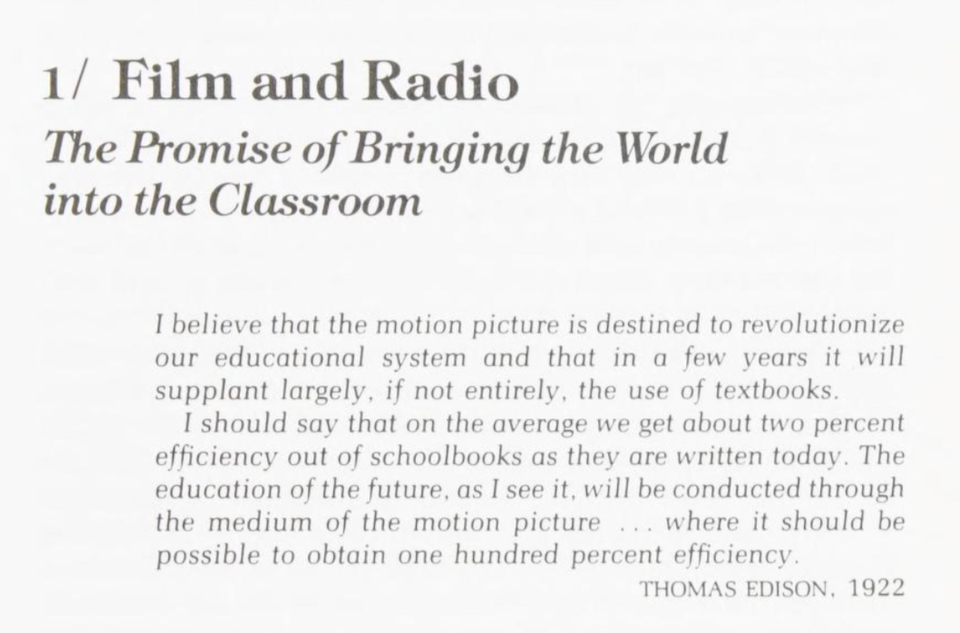
De redactie van Trouw wijst nog even fijntjes op het feit dat technologie de beloftes in het onderwijs steeds niet waarmaakt (iPadscholen krijgen natuurlijk nog even een honorable mention), en zo is het. We kunnen daarvoor trouwens nog veel verder teruggaan in de tijd dan onze eigen Maurice de Hond!
Wat een contrast is de redactie van Trouw met hun collega's van de NRC, waar ze er toch wel heel anders naar kijken, volgens hun opiniestuk staan we nog maar aan het begin van de AI-revolutie:
Studenten moet daarom meteen in het eerste jaar zonneklaar worden gemaakt waarvoor large language models niet en wél gebruikt mogen worden. Want er zijn ook zeker taken waarvoor ze geschikt zijn.
Wat die taken zijn zeggen ze er niet bij, en ook niet hoe een docent om moet gaan met de tsunami aan extra werk als we, volgens hun suggestie, studenten zouden gaan vragen om "bij elk werkstuk ook een verslag van het maak- en denkproces in te leveren" en "Het is daarom het overwegen waard om in ieder geval aan eindscripties een mondeling tentamen te koppelen."
Waar Trouw de autonomie bij de docent legt ("Vinden zij in hun vak een verbod op AI noodzakelijk? Dan moet daarnaar geluisterd worden") moeten de studenten het bij de NRC het zelf doen ("Uiteindelijk is het ook aan studenten zelf om zich aan de mast te binden en bijenwas in hun oren te stoppen om de zoete roep van ChatGPT te weerstaan").
Maar uiteindelijk roepen beide stukken, hoe ze ook verschillen in perspectief, op tot ruimte moet zijn voor leren zonder chat, want dat is waar de friction op de max is!
Grappig trouwens, ik was nog aan het broeden op een goede opdracht voor mijn 5HAVO deze week, omdat ze een project moeten doen over de impact van informatica op de samenleving. Mijn opdracht wordt om deze twee stukken te lezen, de overeenkomsten en verschillen te benoemen en te kiezen waar ze het meer mee eens zijn.
[[1]]: Naast natuurlijk hun onwettenschappelijke geshop in onderzoek.
Wat is het doel van het onderwijs?
Dit vond ik echt een stuk om op de kauwen, van Johannes Visser, die na 6 jaar als Correspondent Onderwijs sinds vorig jaar zelf weer voor de klas staat, dat alleen al vind ik echt een compliment waard, en je merkt het ook aan zijn stukken, die vol zitten met de twijfel die hoort bij lesgeven, in plaats van de ronkende "zo moet het" verhalen die we zo vaak over het onderwijs lezen uit de kokers van mensen die het zelf niet doen
Visser benoemt zijn eigen ongemak: is zijn 6VWO niet altijd een beetje te braaf, en leren ze dan wel goed:
Als ik aan het woord ben, praat er niemand door me heen. Opdrachten leveren ze op tijd in. Van zo’n klas zou iedere leraar wel een klas vol willen. [FH: Ja, die fantasie heeft denk ik iedere leraar!]
[...]
Waarom voel ik zoveel ongemak bij deze leerlingen, die precies doen wat er van hen verwacht wordt? Wat is er nodig om mijn modelklas – letterlijk! – aan de praat te krijgen?
Het stuk is goed, omdat het een mooi overzicht presenteert van onderzoeken waaruit blijkt dat wat je als docent als je doel ziet, sterk beïnvloedt hoe je je leerlingen helpt. Details kan je vinden in het stuk zelf of in de originele papers, maar de take away voor mij was dat als je als docent gefocust bent op de uitkomst van de lessen (toetsen, scores) je dan minder positief zal reageren op nieuwsgierig en exploratief gedrag van leerlingen. Dat weet je ergens natuurlijk wel, maar om dat zo te lezen, dat zette me aan het denken. Ben ik zelf niet ook altijd veel bezig met de volgende toetsweek, en mijn zorgen over goede scores? Kan dat niet minder? Dat is ook de conclusie waar Visser zelf tot komt; minder oefenexamens, en meer nadenktijd in de klas.
Maar het gevoel waarmee ik achterblijf is toch ook ongemak, want dit verhaal en de talloze verhalen like it hebben toch altijd de ondertoon 'school is slecht voor kinderen' waar ik altijd vrij slecht op ga. Kinderen beginnen o zo nieuwsgierig en dan gaan ze naar school, en dan willen ze helemaal niet meer leren.
Dus dan kunnen we ons terecht de vraag stellen of het het doel is van school om jou nieuwsgierig te houden. Misschien is de pubertijd gewoon de fase van het leven niet om echt op kennis te zitten wachten? Die nieuwsgierigheid, die komt vaak prima terug als studenten gaan studeren op een vakgebied dat ze boeit, of later als volwassene. En je kan nog verder gaan, want is nieuwsgierigheid onverdeeld goed? Al die mensen die op internet hun eigen onderzoek doen naar vaccins, de omtrek van de aarde en UFO's doen dat niet omdat het moet van de juf, die zijn lekker nieuwsgierig gebleven!
Ari Schlesinger, een Amerikaanse professor waarmee ik samenwerkte aan mijn feministisch onderzoek in de informatica—door schade en schande wijs geworden in de wereld van de internettrollen—drukte mij op het hart dat je bij iedere zin die je schrijft moet denken "wat doet deze zin in de handen van tegenstanders van onze visie?" Als ik bijvoorbeeld wilde schrijven dat meisjes over het algemeen minder exploratief te werk gaan als ze iets op de computer moeten doen, zei ze: let op met zulke zinnen! Iemand die helemaal niet wil dat er meer meiden informatica kiezen, kan dat zo interpreteren als het idee dat meiden technologie spannend vinden en het eigenlijk niet willen.
En met die zorg lees ik het stuk van Visser; hij is zelf overduidelijk iemand die in school gelooft, anders werk je er niet, maar in de handen van anti-school gurus—die er altijd zijn geweest in het publieke debat, maar nu steeds met "AI kan dat ook" slogans uit de digitale bosjes springen–wordt zo'n stuk zo het zoveelste wapen tegen die saaie docenten die kinderen maar saai en ééndimensioneel maken.
En nu was deze vraag natuurlijk altijd al relevant, maar nog meer ten tijde van AI. Want voor je kan bepalen of AI in het onderwijs zinnig is, moet je eerst besluiten waar onderwijs voor is. Is volgens jou het doel van onderwijs leerlingen voor te bereiden op de arbeidsmarkt? Dan zal je meer genegen zijn om AI te promoten dan als je vindt dat we wereldburgers op moeten leiden die aluiles bevragen, ook waarom de wereld is zoals die is. Daarbij helpt AI waarschijnlijk niet. Ook in deze lijst vol tegenwerpingen tegen AI in het onderwijs van docente Anne Lutz Fernandez, die je als lezer van deze nieuwsbrief allemaal bekend voor moeten komen, wordt het doel van onderwijs aangestipt:
Is it my responsibility as an English teacher to teach students how to use AI? I already have a basketful of responsibilities — and AI is working against them.
Hoort het bij het doel van taalonderwijs om AI te doceren? Nee, zegt Fernandez hier: AI werkt mijn doelen tegen. Maar dat kan je dus alleen vaststellen als je al doelen in beeld hebt.
Op allerhande plekken zien we mensen het gesprek snel afbrengen van de doelen, naar AI toe, en dat zaait verwarring (dat is soms precies de opzet). Dat zien we in een reactie van de Gentse rector over de ophef over haar speech in een goede reconstructie van hun blad Apache. Rector De Sutter zegt daarin:
[A]ls ik daar nu persoonlijk iets uit leer, dan is het wel dat we nog nergens staan in ons begrip van hoe AI juist werkt, wat het juist doet en hoe we daarmee moeten omgaan op een verantwoorde manier.
Kijk de bait en switch! Ow wat snappen we toch weinig van AI! (Laten we er dus nog maar een beetje verder mee experimenteren, is de ongezegde tip). Maar de kwestie gaat niet over AI, maar over de waarheid. Je mag geen dingen zeggen die niet kloppen, of die nu uit AI komen of in een droom bij monde van Moeder Maria tot je zijn gekomen, dat doet er helemaal niet toe.
Als we kraakhelder in beeld hebben dat het doel van onderwijs is om zelf tot een goed onderbouwd verhaal te komen, en daarbij bijvoorbeeld, zoals ik eerder al het mooie stuk van Cat Hicks aanhaalde, het werk dat voor ons kwam te zien als pelgrimstocht, dan kan je dit gebruik van AI op geen enkele wijze toelaten.
Goed trouwens dat wetenschappers van Gent in actie komen, en deze casus zeer terecht aangrijpen niet om de rector verder door het slijk te halen (wordt de wereld daar nu beter van?) maar om de Gentse laissez fair attitude weer ter discussie te stellen. Verantwoord gebruik is geen gebruik (dan hoort u het eens van iemand anders dan Hermans):
‘verantwoord gebruik’ is een sofistisch gedrocht, dat een vals gevoel van morele en pedagogische veiligheid moet creëren.
Krek zo is 't. Universiteiten zijn van hun doelen afgedreven, want studenten voorbereiden op de arbeidsmarkt heeft de overhand gekregen, en dat bedrijfsleven roept om AI kennis. Als je het mij vraagt is dat de reden dat universiteiten niet echt de deur dicht willen gooien.
A tale of two oude mannetjes
Wat een mooi interview met Pen Jillette, uit begin 2024 alweer. Jillette is bekend als helft van goochelaarsduo Pen & Teller. Eén van mijn studievrienden was tamelijk geobsedeerd door ze, dus ik heb het meeste van hun materiaal wel gezien.
Dit is een van de allermooiste! We zien Jillette hier op de cello, hij doet normaal altijd het woord in shows want Teller praat famously nooit.
Opname uit de tv show Fool Us, waar beginnende goochelaars mogen proberen om deze oude rotten in het vak te foppen. Lukt dat, dan mogen ze optreden in het Pen & Teller theater in Las Vegas.
Maar ik wil het niet over zijn magie hebben! Want een lange tijd was ik heel wat minder enthousiast over Pen & Teller, toen ik kennis maakte met hun oude tv-show Bullshit. In deze show die van 2003 tot 2010 liep, debunkten Pen & Teller van alles en nog wat, van dingen die echt onzin zijn zoals de link tussen autisme en vaccinaties tot het nut van detoxxen of onredelijk verzet tegen genetische manipulatie van gewassen. Ook zijn ze in heel veel erg progressief: voor het homohuwelijk, sexwerk, kritiek op te agressieve politieagenten.
Maar, zoals wel vaker gebeurt bij sceptici, soms zijn ze uitgesproken gemeen in hun jacht op "de waarheid", en scheppen ze er genoegen in hun tegenstanders als dom en naïef af te schilderen, voor mij het meest pijnlijk zichtbaar in hun aflevering met Julie Butterfly Hill, een vrouw die 2 jaar in een boom heeft gewoond om die te redden. Ik heb de hele aflevering niet deelbaar kunnen vinden, maar dit korte clipje laat wel zien hoe ze erin stonden toen, it didn't age well.
Kritiek hebben mag, maar let op dat het geen pesten wordt, in de mooie woorden van sci-fi schrijver Terry Pratchett:
Satire is meant to ridicule power. If you are laughing at people who are hurting, it's not satire, it's bullying.
In die aflevering zag ik meer pesten dan iets anders, trappen naar mensen die de wereld beter willen maken door bijvoorbeeld stukjes uit te zenden waarin een woordvoerder zich verspreekt. En de kritiek op de milieu-activisten is ook zo mager en zo voorspelbaar. Ze doen het voor het geld (welk geld?), ze doen het alleen omdat ze ergens bij willen horen, ze snappen niet echt wat ze geloven. En niet alleen dit stuk deed me zeer, Penn & Teller was ook vroege advocaten van kritiek op diversiteitsbeleid, zo klaagden ze al in 2005 over politieke correctheid op universiteiten.
Okee, lange intro, maar deze context is echt relevant te snappen hoe indrukwekkend Jillette's turn is. Want wat lezen we in dat interview uit 2024?
Many times when I identified as Libertarian, people said to me, “It’s just rich white guys that don’t want to be told what to do,” and I had a zillion answers to that — and now that seems 100 percent accurate.
Ik vind dit ontzettend knap, zien dat wat je geloofde, toch niet zo was, en dat de kritiek die mensen op jou hadden uiteindelijk gewoon klopte. Ook op klimaatverandering is hij op andere plekken teruggekomen, al blijft hij erbij dat Al Gore overdreef en dat dat problematisch was.
Jillette kwam tot deze conclusie toen mensen in zijn woonplaats Las Vegas tijdens de corona-crisis een anti-mondmaskers-demonstratie hielden, en hem vroegen om dat te lomen leiden. Toen realiseerde hij zich dus dat die libertariërs de zaakjes toch wel wat anders zagen dan hij. Zijn aanname, dat mensen de overheid niet nodig hebben om goed te doen, omdat ze zelf ook de juiste keuzes kunnen en zullen maken, tsja... we hebben allemaal gezien dat dat niet zo was. Mensen hadden gewoon geen zin om zo'n ding op hun kop te zetten, en werden daarom onredelijk boos. Jillette kijkt er nu zo naar:
ow, you can make the argument that maybe you don’t need to mandate masks — you can make the argument that maybe that shouldn’t be the government's job — but you cannot make the argument that you shouldn’t wear masks.
Wat een contrast met een ander oud mannetje, Scott Adams, tekenaar van Dilbert, die vorige week overleed, en die het tegenovergestelde pad nam, met steeds heftigere extreemrechtse gedachtes. Heel veel mensen, ook Nitish Pahwa, de auteur van dit stuk in Slate, waren echt fan van hoe Dilbert corporate spreadsheet cultuur op de hak nam, maar keken verbaasd toe toen
its creator had devolved into something unrecognizable and unapproachable during the 21st century, as Adams embraced not only the MAGA age but the anti-Black racism and pseudoscientific bigotry that came with it.
Pahwa reconstrueert in enorm detail de spiral van Adams, die blijkbaar in 2006 al begon met het plaatsen van vraagtekens bij de 6 miljoen Joden in de Tweede Wereldoorlog, en in 2011 beweren dat mannen net zo onderdrukt zijn als vrouwen, maar pas echt op gang kwam toen hij in 2015 uitkwam als Trump-fan. Uiteindelijk werd deze MAGA-industrie het enige vaatje dat Adams nog aan kon boren, want Dilbert werd op de meeste plekken gedropt. En het droevigste is dat bij zijn dood zo duidelijk naar voren kwam is dat zijn nieuwe fans vooral fans waren van de controverses en niet van de strip:
Not even Adams’ late-era MAGA friends pretend to care about Dilbert on its own terms.
Slecht nieuws
Ok, de gemoederen lijken weer wat bedaard, maar waarom wil Trump Groenland binnen nou toch zo graag hebben? Misschien komt dat wel omdat hij door de Mercatorprojectie denkt dat dat veel groter is dan het is. Ik vind dit zelf een geloofwaardige hypothese. Tijd om weer eens naar deze hele oude XKCD te kijken?
Schokkend maar o zo voorspelbaar stuk in Volkskrant over hoe ICE in Amerika software van Palantir gebruikt in de zoektocht naar immigranten om op te pakken. Ook dit stuk van 404 media onthult hoe ICE leunt op Webloc, een technologie om wetten te omzeilen:
designed to monitor a city neighborhood or block for mobile phones, track the movements of those devices and their owners over time, and follow them from their places of work to home or other locations
Dit mag normaal alleen als je daarvoor toestemming van een rechter hebt, maar het gebeurt toch (en wie gaat ze daar ook tot de orde roepen?) En denk je nu "jaja, dat is in Amerika", ook de Nederlandse politie en ons leger doet zaken met ze.
Vrouwen komen weinig in de media, en dat is alleen al slecht nieuws, ik schreef er al eerder over. Maar nog droeviger is deze reactie erop in AD, nota bene van politiek verslaggever Elodie Verweij, die zelf de nummer 1 gast in Pauw & De Wit is, en die de schuld even fijntjes bij de vrouwen zelf legt:
Het is aan vrouwen zelf om dat ook te doen. Ik worstel er zelf ook wel eens mee hoor. Vrouwen zien wat sneller beren op de weg.
Ja, met zulke vrienden... Onzin natuurlijk, redacties kunnen zich gewoon morgen als doel stellen om 50% vrouwen aan tafel te hebben, et voila. Mag ik nog even wijzen op 'mijn' uitgever de Geus die dit al sinds de jaren '80 doet?!
En trouwens, wie beren op de weg ziet, ziet die terecht want vrouwen in de media krijgen veel vaker te maken met online haat en intimidatie. Het beste wat je daartegen kan doen—ik heb het een paar keer meegemaakt en dat was zo bijzonder—dat een redactie je na een of twee dagen even nabelt en vraagt hoe jij het hebt beleefd, en meedenkt hoe ze haat tegen kunnen gaan, door bijv niet op X te posten als je je bezorgd maakt.
Ben je (net als ik...) Linkedin ook vrij beu? Volgens dit onderzoek van de Britse denktank Media and Journalism Research Center op 40.000 Engelstalige posts is 90% gemaakt met AI, en worden die vaak zonder enige aanpassing gepost. De auteurs noemen dit een nieuwe vorm van communicatie "Synthetic Low-Information Language", als je geen onderzoeker was zou je het denk ik ook gebakken AI-lucht kunnen noemen, of "thin AIr" in het Engels, nog beter!
Gaan we minder non-fictie lezen? Volgens NielsenIQ werd er vorig jaar 8.4% minder non-fictie verkocht (een sterkere daling dan van alle boeken, die ongeveer 5% was).
Universiteiten willen WOB-verzoeken gaan inperken, want het kost allemaal te veel tijd en geld. Dat kan geen goed nieuws zijn voor de democratische en open universiteit.
En ten slotte deze tamelijk lange read over één knopje in HTML. Niet dat ik nog meer bewijs nodig had voor mijn assessment dat programmeurs hard gaan op complexiteit, maar toch.
Goed nieuws
Als we nu niet snel meer AI gaan gebruiken, dan ploft de bubbel, aldus Satya Nadella van Microsoft. Dus stort jouw pensioen straks in... eigen schuld dikke bult. Dit lijkt mij dus goed nieuws omdat het duidelijk aangeeft dat de race nog niet gelopen is, en dat de adoptie helemaal niet zo magisch en snel is als big tech ons wil doen geloven. The Economist schreef voor de kerst nog dat maar 11% van de werknemers AI gebruikt voor 'goods and services' en dat dat percentage aan het dalen is (het was het jaar ervoor 12%)! Nou dat is toch niet de indruk die ik krijg als ik Linkedin open.
Mooie reconstructie in De Volkskrant hoe twee Nederlandse wetenschappers in een meta-analyse het (relatief nieuwe) vakgebied van 'lesion network mapping' ontzenuwden. In dat vakgebied proberen wetenschappers met hersenscans gebieden te vinden die met elkaar verbonden zijn en samen verantwoordelijk zijn voor allerhande problemen, met grote beloftes tot gevolg. Maar dat staat dus op losse schroeven door het nieuwe onderzoek, en dit keer niet door fraude, maar door een gebrek aan goede overzichtsstudies. Als je alle papers bij elkaar legt en goed analyseert, zie je dat bij ieder onderzoek, naar andere aandoeningen, dezelfde netwerken oplichten, omdat dat nu eenmaal de meest verbonden stukjes hersenen zijn. Mooi voorbeeld van het zelfreinigend vermogen van de wetenschap in actie, mag ook een keer gezegd.
Radboud gaat vanaf 1 februari Fairphones uitgeven als werktelefoon ipv een iPhone of een Samsung, duurzamer en goedkoper omdat Fairphone belooft dat de telefoons 8 jaar lang updates krijgen en 5 jaar garantie.
Ben je al die AI features helemaal zat? Installeer dan deze fijne plugin voor Chrome, Edge, en Firefox en je bent er zo helemaal vanaf!
En dan nog even dit hoopgevende stuk over kleinere klassen, die sinds een paar jaar verplicht zijn in New York (max 20 tot groep 5, max 23 tussen groep 6 en de tweede klas vo, en max 25 vanaf de 3e klas). Docenten zijn uiteraard superenthousiast:
nearly three-quarters said that their schools have reduced class sizes and they have seen positive changes in their classrooms. Educators said they could give students more attention, more detailed feedback, and allow for greater participation in class.
Ow als we al dat geld dat nu in de zakken van big tech verdwijnt toch eens gewoon aan kleinere klassen zouden uitgeven, zeker voor jongere kinderen en kinderen met lage socio-economische status heeft dat effect.
Geniet van je boterham en van het zonnetje!
English
Friction-maxxing
Okay, it's still early in the year, but I'm already declaring this piece in The Cut one of my favorites. Kathryn Jezer-Morton, who usually writes columns about parenting, takes on the the digital world, and with great success. She says that big tech is on a mission to make life as easy as possible:
Reading is boring; talking is awkward; moving is tiring; leaving the house is daunting. Thinking is hard. Interacting with strangers is scary.
But, says Jezer-Morton, these friction-removing tools dehumanize us by taking away truly human tasks. We are fed slop like geese on a farm, and we no longer know how to get out and fry an egg. Her New Years resolution, which I totally agree with, is "friction-maxxing": not making things easier, but harder. It's not just about doing things without your phone, it's about accepting that your brain doesn't need to be stimulated all day long with "scroll dopamine":
Friction-maxxing is not simply a matter of reducing your screen time, or whatever. It's the process of building up tolerance for “inconvenience.”
As someone without a smartphone, I can only applaud this. It's only when you're sitting on a terrace and you don't have any distractions in your pocket that you realize how addicted you are, but also how easy it is to strike up a conversation, look around, think, or just do nothing.
But it's also so tempting. You have work to do, like writing something, for example, but getting started is difficult. That's is good friction, so to say, but starting a big task is difficult when there are distractions. Writer Laura van den Berg (despite her name, she's American) has a concrete tip in a post about how she writes a novel: start with something very small.
This is the point where I feel a lot of writers become overwhelmed. I have a headful of ideas and a shit ton of voice memos: where do I even begin? And this is where I think it can be really helpful to start with small, tactile steps. For me that meant I started by transcribing the voice memos. I listened to them and I typed them up. Simple. A task with a clear purpose and end point.
In other words, you can also reduce friction by making the tasks smaller instead of distracting yourself all the time. Can't manage to read a long piece in one go? Read half of it. That's still better than aimless scrolling.
For Jezer-Morton, however, it goes beyond just putting away your phone and ChatGPT. Your life doesn't have to be perfect; learn to learn with the friction that imperfection creates.
An orientation toward friction is really the only defense we have against the life-annihilating suction of technologies of escape. Without friction, most kids will have no reason to love reading, let alone thinking for themselves. If you're tired of thinking about “screen time,” and who isn't, maybe you need to reorient in terms of friction instead.
Although her advice may be a tad extreme—“Quit your job; toss your tablet; drive for a week; upset your kids”—compared to that, am I suddenly not so radical anymore?—her plea finally made me understand what annoys me so much about the "grow up smartphone-free: advocates [[11]]. They lack a vision for what is good. What are we missing because of the phone, and what should we want instead?
The constant focus on "the phone" obscures where the problem really lies, and that is not with the device. It's the apps that are causing harm! For example, research among professional volleyball players in 2022 showed that after half an hour on Instagram, they demonstrably had less eye-hand coordination, but the control group that watched TV did not! A similar study from 2021 compared social media with watching a documentary and found that only social media caused mental fatigue, so much fatigue that the social media group was also physically less able to do strength training afterwards! And perhaps a striking result of that second study was that there was no difference in the reported fatigue! So participants did not feel tired, but they were.
What I like about Jezer-Morton's story is that she correctly identifies the culprit: not the phone itself, but big tech that makes us addicted.
And when it comes to friction-maxxing, the phone or tablet doesn't have to be thrown out. Because you can also just watch a documentary on your phone that doesn't tire you out, and there are plenty of fun puzzle games, math practice apps, or really good games that offer friction to really enjoy and learn from, or just relax with.
My husband and I love to play play NYT Connections every night, and that is friction! We regularly get stuck because we don't know a word or a truly American phenomenon (What do a bird, a clergyman, a basketball player, and a football player have in common? They could all be cardinals!), but the pleasure we get from making connections together comes from mental effort and the wonderful relief when, after minutes of staring, you see a solution.
It's a totally different use of a phone than doomscrolling, which offers a very consistent emotional experience, constant but endless, while Connections only has one puzzle available each day, so once it's gone, it's gone, and then we move on to something else.
This Dutch piece in newspaper Trouw agrees:
Studying is an extremely educational struggle. The harder it is, the deeper the insights sometimes are. By making an intellectual effort, you can get to know yourself.
[...]
Moral and ethical education only comes from a lived study period with teachers and fellow students who sometimes make things difficult for you.
They also point to recent research by Izaak Dekker, which shows that lecture halls are becoming increasingly empty and students are missing important parts of their education as a result; a trend that already existed before AI but is now becoming even more pronounced.
The editors of Trouw subtly point out that technology continues to fail to deliver on its promises in education, and that history goes way back:
What a contrast the editors of Trouw are to their colleagues at NRC, who take a very different view. According to their opinion piece (also Dutch), we are only at the beginning of the AI revolution:
Students must therefore be made aware in their first year of what large language models should and should not be used for. Because there are certainly tasks for which they are suitable.
They do not specify what those tasks are, nor do they say how a teacher should deal with the tsunami of extra work if, according to their suggestion, we were to ask students to “submit a report on the creative and thought process for each assignment” and “It is therefore worth considering linking an oral exam to final theses, at least.”
Where Trouw places the autonomy with the teacher ("Do they consider a ban on AI necessary in their field? Then they should be listened to"), the NRC says students must do it themselves ("Ultimately, it is also up to students themselves to tie themselves to the mast and put beeswax in their ears to resist the sweet call of ChatGPT").
But ultimately, however different their perspectives may be, both articles call for space to be made for learning without Chat, because that is where the friction is at its maximum!
[[11]]: In addition to, of course, their unscientific shopping around in research.
What is the purpose of education?
I found this a really thought-provoking piece by Johannes Visser, who, after six years as a journalist for the Correspondent, returned to the classroom last year, which I think is really commendable in itself, and you can tell from his articles, which are full of the doubts that come with teaching, instead of the grandiose “this is how it should be” stories we so often read about education from people who don't do it themselves Visser acknowledges his own discomfort: isn't his 12th grade too well-behaved (in Dutch)
When I speak, no one interrupts me. They hand in their assignments on time. Every teacher would like to have a class like that. [FH: Yes, I think every teacher has that fantasy!]
[...]
Why do I feel discomfort with these students, who do exactly what is expected of them? What does it take to get my model class – literally! – talking?
I like the piece, because it presents a nice overview of studies that show that what you see as your goal as a teacher strongly influences how you help your students. Details can be found in the article itself or in the original papers, but the takeaway for me was that if, as a teacher, you are focused on the outcome of the lessons (tests, scores), you will respond less positively to curious and exploratory behavior from students. Of course, you know that somewhere in the back of your mind, but reading it like that made me think. Am I not always preoccupied with the next test week and my concerns about good scores? Couldn't I do less of that? That is also the conclusion that Visser himself comes to: fewer practice exams and more time for reflection in the classroom.
But the feeling I'm left with is still one of discomfort, because this story and countless others like it always have the underlying tone that 'school is bad for kids', which I always find quite upsetting. Children start out so curious, and then they go to school, and then they don't want to learn anything anymore.
So we can rightly ask ourselves whether the purpose of school is to keep you curious. Maybe puberty is just not the stage of life to really be interested in knowledge? That curiosity often returns when students study a subject that interests them, or later as adults. And you can go even further, because is curiosity always a good thing? All those people who do their own research on the internet about vaccines, the circumference of the earth, and UFOs don't do it because their teacher tells them to, they've just stayed curious!
Ari Schlesinger, an American professor with whom I collaborated on my feminist research in computer science—who learned the hard way in the world of internet trolls—emphasized to me that with every sentence you write, you have to think, “What will this sentence do in the hands of opponents of our vision?” For example, if I wanted to write that girls are generally less exploratory when they have to do something on the computer, she said: be careful with sentences like that! Someone who doesn't want more girls to choose computer science could interpret that as the idea that girls find technology scary and don't really want it.
And it is with that concern that I read Visser's piece; he is clearly someone who believes in school, otherwise you wouldn't work there, but in the hands of anti-school gurus—who have always been present in public debate, but now increasingly pop up with "AI can do that too"—such an article becomes yet another weapon against those boring teachers who make children boring and one-dimensional.
And now, of course, this question has always been relevant, but even more so in the age of AI. Because before you can determine whether AI makes sense in education, you first have to decide what education is for. Do you believe that the purpose of education is to prepare students for the job market? Then you will be more inclined to promote AI than if you believe that we should educate global citizens who question everything, including why the world is the way it is.
AI is unlikely to help with that. This list of objections to AI in education by teacher Anne Lutz Fernandez, which should be familiar to all readers of this newsletter, also touches on the purpose of education:
Is it my responsibility as an English teacher to teach students how to use AI? I already have a basketful of responsibilities — and AI is working against them.
Is teaching AI part of the purpose of language education? No, says Fernandez here: AI works against my goals. But you can only determine that if you already have goals in mind.
In all sorts of places, we see people quickly shifting the conversation from the goals to AI, and that sows confusion (which is sometimes exactly the intention). We see this in a response from the rector of Ghent University about the commotion surrounding her speech in a good reconstruction in their magazine Apache. Rector De Sutter says (in Dutch)
If I learn anything from this personally, it is that we are still nowhere in our understanding of how AI actually works, what it actually does, and how we should deal with it in a responsible manner.
Look at the bait and switch! Oh, how little we understand about AI! (So let's just experiment with it a little more, is implied). But the issue is not about AI, it's about the truth. You can't say things that aren't true, whether they come from AI or in a dream spoken by Mother Mary, it doesn't matter at all.
If we are crystal clear that the goal of education is to arrive at a well-founded narrative ourselves, and in doing so, for example, as I mentioned earlier in Cat Hicks' beautiful piece, to view the work that came before us as a pilgrimage, then you cannot allow this use of AI in any way.
It is good, by the way, that scientists in Ghent are taking action and rightly seizing on this case, not to drag the rector further through the mud (does that make the world a better place?), but to call the Ghent laissez-faire attitude into question again. Responsible use is no use (and for once you're hearing this from someone else):
‘responsible use’ is a sophistical monstrosity designed to create a false sense of moral and pedagogical security.
That's exactly how it is. Universities have strayed from their goals, because preparing students for the labor market became the dominant goal, and that business community is calling for AI knowledge. If you ask me, that's the reason universities don't really want to close the door on AI.
A tale of two old men
What a great interview with Penn Jillette, from early 2024. Jillette is known as one half of the magician duo Penn & Teller. One of my college friends was pretty obsessed with them, so I've seen most of their material.
One of the great Pen & Teller tricks. This is one of the best! We see Jillette here playing the cello; he usually does the talking in shows because Teller famously never speaks.
Recording from the TV show Fool Us, where novice magicians get to try to fool these old hands. If they succeed, they get to perform at the Pen & Teller theater in Las Vegas.
But I don't want to talk about his magic! For a long time, I was much less enthusiastic about Pen & Teller when I got to know their old TV show Bullshit. In this show, which ran from 2003 to 2010, Pen & Teller debunked all sorts of things, from things that are really nonsense, such as the link between autism and vaccinations, to the usefulness of detoxing or unreasonable opposition to genetic modification of crops. They are also very progressive in many ways: in favor of gay marriage, sex work, and criticism of overly aggressive police officers.
But, as is often the case with skeptics, they are sometimes downright mean in their pursuit of "the truth", and seem to enjoy in portraying their opponents as stupid and naive. For me, this was most painfully evident in their episode with Julie Butterfly Hill, a woman who lived in a tree for two years to save it. I couldn't find the entire episode, but this short clip shows how they were at the time, and it didn't age well.
Criticism is fine, but be careful that it doesn't turn into bullying, in the beautiful words of sci-fi writer Terry Pratchett:
Satire is meant to ridicule power. If you are laughing at people who are hurting, it's not satire, it's bullying.
In that episode, I saw more bullying than anything else, kicking people who want to make the world a better place by, for example, broadcasting clips in which a spokesperson slips up. And the criticism of the environmental activists is also so weak and predictable. They do it for the money (what money?), they do it just because they want to belong, they don't really understand what they believe in. And it wasn't just this piece that hurt me, Penn & Teller were also early advocates of criticism of diversity policy, complaining about political correctness at universities as early as 2005.
Okay, long intro, but this context is really relevant to understanding how impressive Jillette's turn is. Because what do we read in that interview from 2024?
Many times when I identified as a Libertarian, people said to me, “It's just rich white guys who don't want to be told what to do,” and I had a zillion answers to that — and now that seems 100 percent accurate.
I think this is incredibly impressive, to see that what you believed wasn't true after all, and that the criticism people had of you was ultimately correct. He has also revisited climate change in other places, although he maintains that Al Gore exaggerated and that this was problematic.
Jillette came to this conclusion when people in his hometown of Las Vegas held an anti-face mask demonstration during the coronavirus crisis and asked him to lead it. That's when he realized that those libertarians saw things differently than he did. His assumption that people don't need the government to do good, because they can and will make the right choices themselves, well... we have all seen that this was not the case. People simply did not want to put such a thing on their heads and therefore became unreasonably angry. Jillette now says:
ow, you can make the argument that maybe you don’t need to mandate masks— you can make the argument that maybe that shouldn’t be the government's job — but you cannot make the argument that you shouldn’t wear masks.
What a contrast to another old geezer, Scott Adams, creator of Dilbert, who passed away last week and who took the opposite path, with increasingly extreme right-wing views. Many people, including Nitish Pahwa, the author of this piece in Slate, were big fans of how Dilbert poked fun at corporate spreadsheet culture, but watched in amazement as
its creator had devolved into something unrecognizable and unapproachable during the 21st century, as Adams embraced not only the MAGA age but the anti-Black racism and pseudoscientific bigotry that came with it.
Pahwa reconstructs in great detail Adams' spiral, which apparently began in 2006 with him questioning the 6 million Jews in World War II, and in 2011 claiming that men are just as oppressed as women, but really took off when he came out as a Trump fan in 2015. Ultimately, this MAGA industry became the only barrel Adams could tap into, as Dilbert was dropped in most places. And the saddest thing is that his death made it so clear that his new fans were mainly fans of the controversies and not of the comic itself:
Not even Adams' late-era MAGA friends pretend to care about Dilbert on its own terms.
Bad news
Okay, tempers seem to have calmed down a bit, but why does Trump want Greenland so badly? Maybe it's because the Mercator projection makes him think it's much bigger than it is. I find this a credible hypothesis. Time to take another look at this very old XKCD?
Shocking but oh-so-predictable article in Volkskrant about how ICE in America uses Palantir software (Dutch) in its search for immigrants to arrest. This article by 404 Media also reveals how ICE relies on Webloc, a technology designed to circumvent laws:
designed to monitor a city neighborhood or block for mobile phones, track the movements of those devices and their owners over time, and follow them from their places of work to home or other locations
Normally, this is only allowed if you have permission from a judge, but it happens anyway (and who is going to call them to order?). And if you're thinking, "Yeah, yeah, that's America" the Dutch police and our army also do business with them (Dutch).
Women are rarely featured in the media, which is bad news in itself, as I wrote about earlier. But even sadder is this response in AD, notably from political reporter Elodie Verweij, who is herself the number one guest on Pauw & De Wit, and who subtly places the blame on women themselves:
It's up to women themselves to do that. I struggle with it myself sometimes. Women are quicker to see obstacles in the way.
Yeah, with friends like that... Nonsense, of course. Editorial teams can simply set a goal tomorrow to have 50% women at the table, et voila. May I point out that "my" publisher, De Geus, has been doing this since the 1980s?!
And besides, those who see obstacles are right to do so, because women in the media are much more likely to face online hate and intimidation. The best thing you can do about this—I've experienced it a few times and it was so special—is for an editorial team to call you after a day or two and ask how you experienced it, and to think along with you about how they can combat hate, for example by not posting on X if you are concerned.
Are you (like me...) also pretty fed up with LinkedIn? According to this study by the British think tank Media and Journalism Research Center, 90% of 40,000 English-language posts are created with AI, and are often posted without any modification. The authors call this a new form of communication “Synthetic Low-Information Language”. If you weren't a researcher, I think you could also call it baked AI air, or “thin AIr” in English, even better!
Are we going to read less non-fiction? According to NielsenIQ, sales of non-fiction fell by 8.4% last year (a sharper decline than for all books, which was around 5%).
Universities want to restrict Freedom of Information requests because they take too much time and money. That can't be good news for democratic and open universities.
And finally, this rather long read about one button in HTML. Not that I needed any more proof for my assessment that programmers dig on complexity, but still.
Good news
If we don't start using more AI soon, the bubble will burst, according to Satya Nadella of Microsoft. So if your pension collapses, it's your own fault. I think this is good news because it clearly indicates that the race is not over yet, and that adoption is not as magical and rapid as big tech would have us believe. Before Christmas, The Economist wrote that only 11% of employees use AI for 'goods and services' and that this percentage is declining (it was 12% the year before)! Well, that's not the impression I get when I open LinkedIn.
De Volkskrant published a nice reconstruction of how two Dutch scientists debunked the (relatively new) field of 'lesion network mapping' in a meta-analysis (in Dutch). In this field, scientists use brain scans to try to find areas that are connected and jointly responsible for all kinds of problems, with great promises as a result. But the new research doubts these claims, and this time not because of fraud, but because of a lack of good overview studies. If you put all the papers together and analyze them properly, you see that in every study, on different conditions, the same networks light up, because those are simply the most connected parts of the brain. A good example of the self-cleaning capacity of science in action, it must be said.
Starting February 1, Radboud University in Nijmegen will start the use of Fairphones for employees instead of iPhones or Samsungs, which are more sustainable and cheaper because Fairphone promises that the phones will receive updates for 8 years and a 5-year warranty.
Are you fed up with all AI features in everything? Install this great plugin for Chrome, Edge, and Firefox and you'll be rid of all AI right away!
And to close this encouraging piece about smaller classes, which have been mandatory in New York for a few years now (max 20 to grade 5, max 23 between grade 6 and the second year of secondary school, and max 25 from the third year onwards). Teachers are obviously very enthusiastic:
nearly three-quarters said that their schools have reduced class sizes and they have seen positive changes in their classrooms. Educators said they could give students more attention, more detailed feedback, and allow for greater participation in class.
If we were to spend all money that is currently disappearing into the pockets of big tech on smaller class sizes, it would certainly have an impact, especially for younger children and children with low socioeconomic status (Dutch).
Enjoy your sandwich!
Member discussion