Special: Lezen | Reading
Geen gewone nieuwsbrieven in de vakantie want ik heb geen zin om te doemscrollen, dus alleen specials. Die verzamelen ook stukken uit andere nieuwsbrieven, dus als je niet alles hebt kunnen bijhouden dit jaar (niet gek, ik heb in totaal meer dan 200.000 woorden op deze nieuwsbrief gezet!) komen er een paar hoogtepunten langs per thema.
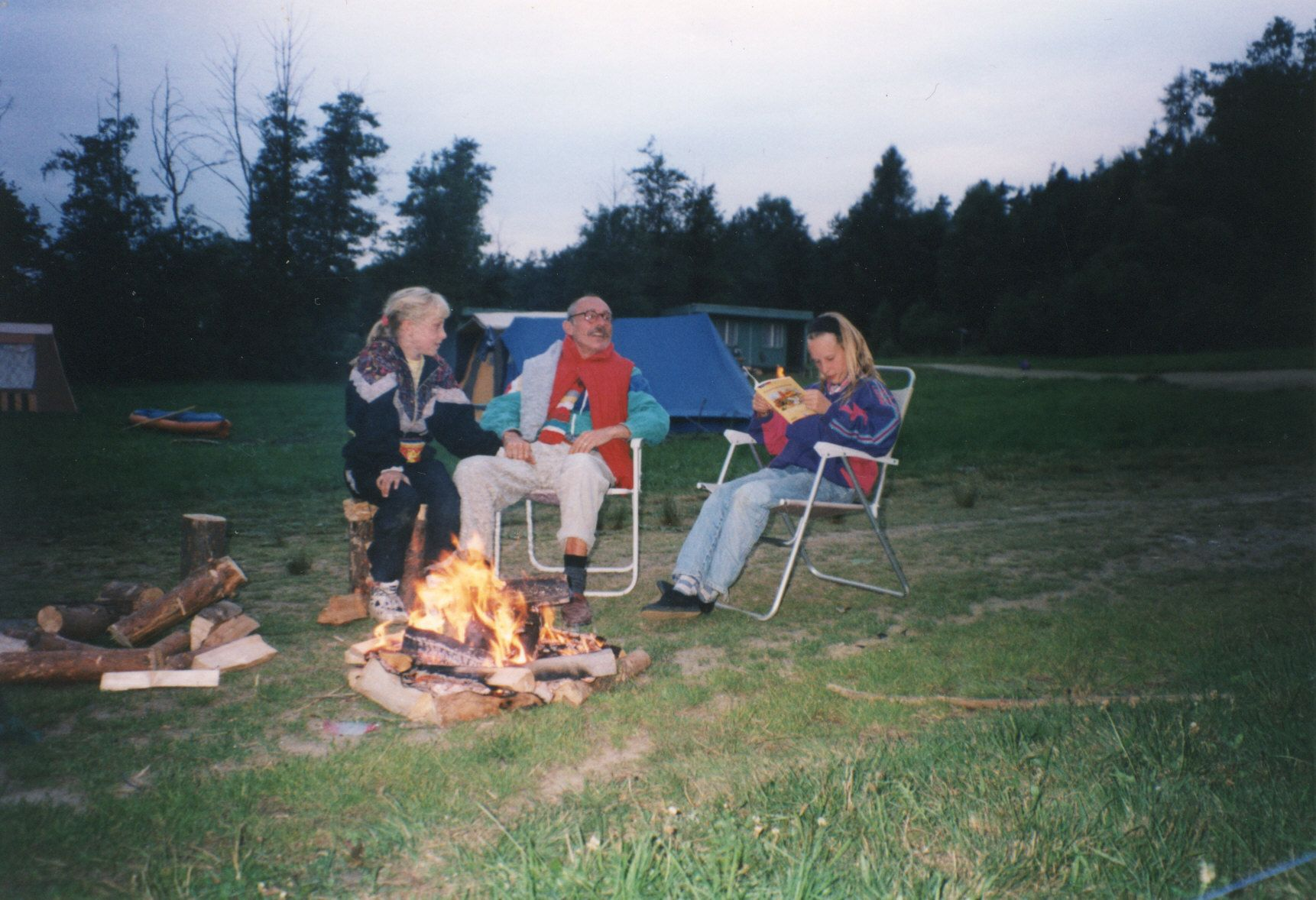
Deze week: Lezen! Het mag duidelijk zijn uit deze nieuwsbrief, ik ben gek op lezen. Dat was ik als kind al, I love deze foto van mijzelf als kind op vakantie op vakantie, te druk met lezen om zelfs maar leuk te kijken voor de foto (kan helaas niet goed zien waar ik zo geboeid in aan het lezen ben!)
Maar tijdens mijn studie en mijn promotie verschoof mijn liefde voor lezen naar de achtergrond , niet eens zozeer denk ik omdat ik er geen tijd voor had, maar meer omdat mensen om mij heen er niet zo mee bezig waren, dus ik niemand had om goede tips mee uit te wisselen, en het net te vroeg was voor lees-socials zoals Goodreads.
Maar de laatste jaren, zeker na mijn aanstelling op de VU die als een soort bevrijding voelde om echt te gaan doen wat ik wil, heb ik de liefde voor lezen weer totaal omarmd. En ik ben zeker niet de enige, in een van mijn allereerste nieuwsbrieven in week 5 deelde ik nog het fijne feitje dat dat er nog steeds meer papieren boeken dan ebooks verkocht worden.
Jammer voor mij was deze opleving in de vroege jaren '20, dus ja, ik was nog maar net lekker bezig en chatGPT kwam het feestje komen verstieren, en nu moet je bij alles wat je leest (van na 2022 dan), aan iedere regel twijfelen, schreef ik in week 42.
Wat er ook veranderd is, en wat ik een aantal nieuwsbrieven ook heb aangestipt, is dat ik nu veel meer dan vroeger nadenk over de perspectieven van wie leest en schrijft. Als kind dacht ik (natuurlijk?) nooit na over schrijvers en schrijfsters en hoe hun verdeling was, en in kinderboeken is die verdeling denk ik ook redelijk gebalanceerd, we hadden Annie MG Schmidt en Thea Beckman en Tonke Dragt en Astrid Lindgren naar Roald Dahl en Paul van Loon en Jan Terlouw. Pas als tiener bij je boekenlijst word je geconfronteerd met een canon met veel meer mannen dan vrouwen.
Mijn terugkeer naar het lezen kwam nadat ik al uitgebreid had nagedacht over feminisme, waarover ik dit voorjaar natuurlijk schreef in Volkskrant, over mijn ervaringen in mijn vakgebied. Diezelfde dynamiek zie ik nu dan ook in de literatuur. Wat vrouwen schrijven, is romance, of, een "vrouwenthriller", daarover schreef ik in week 35, en in week 37 nog een keer omdat Paul Sebes in plaats van luisteren, begon te klagen dat hij kritiek kreeg op zijn sociale constructie van genres. Maar wat we lezen doet ertoe, dat lees je in deze heerlijke NRC-column die het zeiken op lezen en plein public fileert.
De kritiek op de mannelijke performative reader die ik het meest zie, is dat hij het alleen doet om indruk te maken op vrouwen. Wat is daar mis mee? [...] Als je ‘s ochtends een roodborstje in de tuin hoort fluiten denk je toch ook niet ‘wat een aansteller, hij doet dit alleen maar omdat-ie wil neuken’?
Love dit! Liever dat mensen gaan lezen om indruk te maken op een ander dan knokken of irriteren. Worst case is er niemand onder de indruk, maar heb je wel maar mooi even wat heerlijks gelezen. Maar de boodschap van Thomas Hogeling gaat verder dan smakelijk zeiken over zeikers:
Om iemand met een goede literaire smaak te worden, moet je eerst een tijdje doen alsof. In het begin voelt dat misschien wat pretentieus maar daar moet je je niet door laten afleiden, want dan lukt het niet. Het is eigenlijk net als met slapen: je gaat eerst liggen, je doet je ogen dicht – je pretendeert te slapen. En op een gegeven moment slaap je gewoon.
Dit is zo waar, waar kinderboeken meestal als vanzelf aansluiten bij je fantasiewereld, voelt literatuur soms onwerkelijk, het taalgebruik, de verhalen, de kennis die soms als bekend wordt veronderstelt. Als aan wat we wennen alleen de taal van de man is, doen we zoveel verhalen tekort.
Podcasttip!!
En dan sluit ik deze special af met de allerallerleukste podcast die ik het afgelopen jaar ontdekt heb: If books could kill, van journalisten Michael Hobbes en Peter Shamshiri, met als slogan: "The airport bestsellers that captured our hearts and ruined our minds". Het format is simpel, iedere aflevering pakken ze een 'airport bestseller' boek, een non-fictie boek dat te goed klinkt om waar te zijn, en dat bij nadere lezing ook blijkt. Sapiens, Freakonomics, the End of History, Bobos in paradise en ga zo maar door.
Die twee zijn cynisch, maar dat is ook terecht, want er is op de boeken steeds enorm veel aan te merken. Natuurlijk moet je altijd versimpelen voor een populair science boek, maar deze schrijvers snijden wel hele grote hoeken af, en vaak trappen ze in de val dat ze eerst een hele logisch narratief kiezen dat heel edgy is, en daar dan selectief feiten aan hangen.
Shamshiri heeft zich voor iedere aflevering bewonderingswaardig diep in de boeken en het onderzoek dat ze beschrijven gestort, regelmatig interviewt hij andere experts als voorbereiding, en als duo werken ze waanzinnig goed omdat Shamshiri iedere keer vol vuur aan Hobbes uitlegt wat hij nu weer allemaal ontdekt heeft, die daar steeds droog en vol humor op inhaakt.
Maar Hobbes en Shamshiri denken ook veel na over de impact die deze "tedtalkification" heeft op de wereld, want deze opiniemakers hebben vaak onder de oppervlakte (of soms heel openlijk) rechtste ideeën over maakbaarheid, ras, armoede en heel invloed op het publieke debat. Ze zijn, zo zeggen ze in de aflevering over David Brooks [[1]] , de waterdragers voor conservatief en rechts Amerika omdat ze steeds weer met nieuwe hypotheses aankomen voor problemen, en zo de discussie wegleiden van echte oorzaken zoals racisme en groeiende ongelijkheid.
Door het maken van deze podcast ontdekten ze, zo leggen ze uit, dat er geen andere laag van wetenschapscommunicatie is, maar het juist dit soort verhalen over wetenschap is dat tot machtshebbers bij bijvoorbeeld Davos doordringt, omdat het product dat ze verkopen niet de feiten in de boeken zijn, maar het idee dat we wereld maakbaar is, of dat arme mensen arm zijn omdat ze weinig wilskracht hebben, en dat dat soort denkbeelden vaak leidt tot fijner slapen als je er niets aan doet. Dat gevoel is hun product.
Mijn wens voor 2026 is dat de minstens net zo cynische Dieuwertje Kuijpers (ook een ontdekking van dit jaar over wie ik in week 17 schreef) een Nederlandse versie begint en onze eigen Bregmans en Luyendijken verder gaat fileren.
En nog een fijn nieuwtje voor wie net als ik houd van in boeken schrijven, dat is dus goed voor je brein, omdat je dan teksten dan actief aan het verwerken bent, zo blijkt uit onderzoek! Dus pak een potlood (zo zuinig ben ik dan nog wel) en krabbel lekker. Of nog beter, begin een 'Zibaldoni', een boekje waarin je je eigen aantekeningen maakt, een geniaal idee dat ik haalde uit The Notebook, maar daarover mee in mijn volgende special over schrijven!
[[1]]: Als die naam bekend klinkt, dat is omdat hij laatst een column schreef dat we eens op moeten houden met zeuren over Epstein valk voordat bekend werd dat hij zelf ook connecties met hem had.
English
No regular newsletters in the holidays because I don't have time to doom scroll, so I will be doing holiday specials, with some selected pieces from other newsletters, so if you haven't been able to keep up with everything this year (not surprising, I've put more than 200,000 words in this newsletter!), there will be a few highlights per theme.
This week: Reading! It should be clear from this newsletter that I love reading. I already did as a child. I love this photo of myself as a child on vacation, too busy reading to even look nice for the photo (unfortunately, I can't see what I'm reading!).
But during my undergrad and my PhD my love of reading slowly faded, not so much because I didn't have time for it, but more because the people around me weren't that into it, so I had no one to exchange good tips with, and it was just too early for reading socials like Goodreads.
But in recent years, especially after my appointment at VU University Amsterdam, which felt like a kind of liberation to really do what I want, I have fully embraced my love of reading again. And I'm certainly not the only one. In one of my very first newsletters in week 5, I shared the nice fact that more paper books are still sold than ebooks (in Dutch)
Unfortunately for me, this revival was in the early 2020s, so yes, I had only just gotten started when ChatGPT came along and ruined the party, and now you have to doubt every line of everything you read (after 2022, that is), I wrote in week 42.
What has also changed, and what I have mentioned in a number of newsletters, is that I now think much more than I used to about the perspectives of those who read and write. As a child, I (naturally?) never thought about writers and how they were divided, and I think that division is fairly balanced in children's books. We had Annie MG Schmidt and Thea Beckman and Tonke Dragt and Astrid Lindgren to Roald Dahl and Paul van Loon and Jan Terlouw. It is only as a teenager, when you look at your reading list, that you are confronted with a canon that includes many more men than women.
My return to reading came after I had already thought extensively about feminism, which I wrote about this spring in Volkskrant, about my experiences in my field. I now see the same dynamic in literature. What women write is romance, or a “women's thriller,” as I wrote about in week 35, and again in week 37 because Paul Sebes, instead of listening, started complaining that he was being criticized for his social construction of genres. But what we read matters, as you can read in this delightful NRC column that dissects the whining about reading in public. (both in Dutch only).
The criticism of the male performative reader that I see most often is that he only does it to impress women. What's wrong with that? [...] When you hear a robin singing in your garden in the morning, you don't think, “What a poser, he's only doing this because he wants to get laid,” do you? (translated from Dutch)
Love this! Isn't it better that people read to impress others than to fight or annoy them? Worst case scenario, no one is impressed, but at least you've read something wonderful. But Thomas Hogeling's message goes beyond delightful whining about whiners:
To become someone with good literary taste, you first have to pretend for a while. At first, it may feel a bit pretentious, but don't let that distract you, because then it won't work. It's actually just like sleeping: first you lie down, close your eyes—you pretend to be asleep. And at some point, you just fall asleep. (translated from Dutch)
This is so true. Whereas children's books usually connect naturally with your fantasy world, literature sometimes feels uncanny, with its terse language, stories, and knowledge that is sometimes assumed to be familiar. If the only thing we get used to is the language of men, we are missing out on so many stories.
Podcast tip!
And I'll end this special with the very best podcast I discovered last year: If books could kill, by journalists Michael Hobbes and Peter Shamshiri, with the slogan: “The airport bestsellers that captured our hearts and ruined our minds”.
The format is simple: in each episode, they pick an “airport bestseller,” a non-fiction book that sounds too good to be true, and upon closer reading, turns out to be just that. Sapiens, Freakonomics, The End of History, Bobos in Paradise, and so on.
The two are cynical, but rightly so, because there is always a lot to criticize about these books. Of course, you always have to simplify when writing a popular science book, but these authors take very big liberties, and often fall into the trap of first choosing a very logical narrative that is very edgy, and then selectively attaching facts to it.
Shamshiri immerses himself deep into each book and, regularly interviewing other experts in preparation, and as a duo they work incredibly well because Shamshiri extremely enthusiastically explains what he has discovered each time to Hobbes, who always responds dryly and humorously.
But Hobbes and Shamshiri also think a lot about the impact this "tedtalkification" has on the world, because these opinion makers often have right-wing ideas about social engineering, race, poverty, and a great deal of influence on public debate, either beneath the surface or sometimes quite openly. They are, as they say in the episode about David Brooks [[11]] , "water carriers" for conservative and right-wing America because they keep coming up with new hypotheses for problems, thus diverting the discussion away from real causes such as racism and growing inequality.
By making this podcast, they explain, they discovered that there is no other layer of science communication, but that it is precisely these kinds of stories about science that ultimately reach Davos, because the product they sell is not the facts in the books, but the idea that we can shape the world, or that poor people are poor because they have little willpower, and that kind of thinking will help you sleep if you do nothing about it. That feeling ís their product.
My wish for 2026 is that our very own, and equally cynical Dieuwertje Kuijpers (also a discovery of this year, I wrote about her in week 17, in Dutch) will start a Dutch version, and continue to dissect our own Bregmans and Luyendijken.
And another piece of good news for those who, like me, love to write in books: research shows that this is actually good for your brain, because you are actively processing texts! So grab a pencil (I don't really want to damage the books!) and start scribbling. Or even better, start a 'Zibaldoni', a notebook in which you make your own notes, a brilliant idea I got from The Notebook, but more on that in my upcoming special on writing!
[[11]]: If that name sounds familiar, it's because he recently wrote a column saying we should stop talking s much about Epstein before it became known that he himself had connections with him.
Member discussion